Showing posts with label recipes. Show all posts

Friday, April 19, 2013

The Mr. Toad

My roommate's wonderful girlfriend gave me a bottle of Fernet Branca, because she realized she couldn't stand it. I set about to find a use for it other than the classic Fernet and Coke (which, incidentally, is huge in Argentina).

1/8th shot Fernet Branca (or thereabouts)
1 shot rye whiskey
shaken with ice
garnish with a twist of lime peel

It smells like a musky man's man just brushed his teeth and put on deodorant. The whiskey fills out the flavor, softening it with oak and warm grain flavors while the sharp, complex, herbal Fernet plays off of the spicy rye notes and, importantly, off the aroma of the lime peel. The woody incense qualities in Fernet's taste play nicely with the oak. This drink is not for the faint of heart, as Fernet is pretty intense and there's no real sweetness in there and peppery rye is a heck of a grounding ingredient, but I frankly think it's the best Fernet drink I've ever had, and Fernet is pretty fascinating.

Sarah suggested the name, as a shortening of the Disneyland feature "Mr. Toad's Wild Ride", because *faces camera with a plastic grin* "It's a wild ride!" So, oddly enough, credits go to the Excelsior House Tasting Team, even if I left Excelsior a year ago. I dedicate this drink to Aileen and her hatred of Fernet.

Sunday, February 24, 2013

California Cajun Gumbo

My dad left Louisiana long ago, never turning back after he left for college. Except for pronouncing the word "cord" as "card" he has lost his accent, but he has carried his Cajun heritage with him in the form of his gumbo. He doesn't make it very often and, as I will explain later, his gumbo is not precisely by-the-book. Rather, it is a subtly innovative and rather excellent version of that famous, heavy, and piquant soup. When I say "California Cajun Gumbo", I mean the gumbo style that my dad, my sister and I make. My sister and I's gumbo has begun to deviate from our dad's, but it is just a lazy/embellished take on his model. More on that later. Here is how to make his gumbo:

3 large yellow onions, diced "the size of a nickel"
3 green bell peppers, diced
4 stalks of celery, diced
1 bunch green onions, finely chopped
2-3 cups (1 bunch or less) parsley, finely chopped
2/3 jar (~1 1/2 cups) Kary's dry roux
1 lb/link of double-smoked Cajun sausage, chopped (half-inch slices)
3-5 lbs chicken thighs
paprika, cayenne, black pepper, salt, flour and vegetable oil

Serve with rice

Fill a stock pot ("gumbo pot") with roughly 2 gallons of water and bring to a boil. Foist vegetable chopping on an underling. While the water is heating, pan fry the onions in a bit of oil until they are golden brown. Add them to the pot. Brown the bell peppers the same way. Once the pot is properly boiling, turn off the heat and mix in the roux. Spend 10 minutes vigorously stirring roux, smushing clumps with the spoon and scraping the bottom of the pot (ideally, using a long metal spoon with a flat tip, or "gumbo spoon"). Turn heat back on and add the peppers and celery to the pot. Boil for 40 minutes, stirring every 5-10 minutes.

While vegetables are boiling, get out the chicken. In a large bowl, pour equal parts salt, paprika (with cayenne to taste) and black pepper (roughly 2-3 Tbsps). Eyeball three parts flour and mix ingredients together. Dredge chicken thighs in this mixture and pan fry once again in oil at high temperature. Pull them out when browned on the outside, they needn't be cooked through.

Add sausages after the vegetables have boiled for 40 minutes. Boil for another 30 minutes. Add browned chicken to the pot and boil for another 30 minutes. Pull out the chicken into a large serving bowl. Skim off fat and season to taste with red pepper, black pepper and salt. Boil the pot for another few minutes and then turn off the heat, immediately stirring in the parsley and green onions at flame out.

Serve in broad bowls, putting the rice and a piece of chicken in first, then pouring the gumbo over. Add pepper vinegar (vinegar soaked in hot peppers), tobasco, and gumbo file to taste. Enjoy!


There are many types of gumbo. The "chicken and sausage gumbo" my father makes is a subtype of the broader meat-and-roux type and is perhaps the most iconic of all Cajun dishes. My dad's version deviates from the most common Louisiana version in the following ways:

-There isn't usually any browning-- none. Dad says it's done for special occasions, like a Christmas gumbo. Frankly, Uncle Pierre seemed pretty baffled by the idea of browning everything-- it's a pain in the ass. He said some Cajuns do it, but it tends to be a family taste thing, not something done on special occasions.
-Sausage is not double-smoked, but rather single-smoked (leaving it more tender and less intense).
-Gumbo is primarily a winter dish-- a hearty soup for cold weather-- so, as my grandmother pointed out, including bell peppers isn't especially authentic to gumbo of 50 years ago, when bell peppers were only available in the summer. Bell peppers are used in Louisiana gumbos sometimes and especially in summer gumbos, but they are not considered characteristic of gumbo.
-Paprika is not used, but rather a local ground red pepper blend. The term "red pepper" is used as shorthand for both sweet and cayenne pepper.

Classic Cajun meat-and-roux gumbo, as it is made in my dad's hometown, is made with: onions, celery-and/or-parsley, smoked pork of some kind (often tasso in addition to smoked sausage), meat from bird or small game (rabbit, for instance), wet or dry roux, often garlic, definitely red pepper, black pepper and salt. It's really a pretty simple, flexible dish, and without the browning step it's not too difficult to make.

Let me return to my dad's recipe-- onions, celery and green bell peppers are the holy trinity of Cajun cuisine and are fundamental to many classic Cajun dishes-- just not gumbo. Bell peppers may be "inessential", but they've always been my favorite part of dad's gumbos, and I can't imagine a Cali gumbo without fresh peppers. The browning step really is a pain in the ass. Though it contributes to a richer and more complex flavor, gumbo made without browning is still excellent. The roux likely contributes the lion's share of browned "Maillard Reaction" flavor in either case. Paprika contributes a certain characteristic bitterness that distinguishes it from Cajun red pepper, it's bitterness complementing the relatively brittle dry roux flavor. My Louisiana family thought the idea of using paprika to be quite interesting, and I think it's an improvement. Dad uses dry roux and double-smoked sausage for ease of transport back to Cali. In Louisiana, wet roux is more authentic (dry roux must be made in an oven, which Cajuns traditionally didn't have) and it is esteemed for its richer flavor, while dry roux is considered to be the "healthy option". I actually prefer dry roux's lighter and perhaps more toasted flavor. It's also easier to make. While Cajuns love tasso and often use it in gumbo, I think we Californians generally think of tasso as second fiddle to sausage and just don't make space for it in our suitcases (after all, it's called "chicken and sausage gumbo", not "chicken and tasso").

Bri and I have been tinkering with our dad's recipe. I've found that single-smoked sausage transports just fine, though I need to use more of it to achieve the same smokiness. I've mostly dispensed with browning, though I've still been browning the onions (browned onions=drool). I'll still dredge the chicken, but I'll be substituting roux for flour so that I'm not skimping on Maillard Reaction goodness (frying breaded chicken essentially makes roux of the flour in Dad's version). I've also started to think about the trinity as a plant-family thing:
Onions- allium genus (garlic, green onions, shallots, leeks, chives)
Peppers- note that even classicist gumbo has a blend of multiple dried red peppers
Celery- umbellifer family (parsley, carrots, parsnips, cilantro, dill, fennel, cumin, lovage, angelica)

Once I thought of the Cajun holy trinity as having multiple participants on each of three "teams", it presented an opportunity to play around. I've switched in poblano (my favorite) and jalapeƱo peppers for bell peppers in my gumbos. Poblanos have great flavor, but I'm going to add the green bells back for their texture. It also just occurred to me that gumbo would be a great outlet for that smoked paprika I never know what to do with, and for all the interesting dried peppers available in Mexican markets. I've added parsnips to mixed effect-- two large parsnips added fantastic flavor, but introduced a perhaps inappropriate starchy sweetness. I'm going to scale back to just one parsnip. I very tentatively tried adding cilantro. There's a sweet/fenugreek quality to cilantro that worked surprisingly well. It made the gumbo taste vaguely exotic, but still discernibly Cajun. If I run across some lovage or angelica I'll try them for the same reason. They would probably work even better, but are difficult to find. I'll keep my eyes peeled-- I should be able to find dried angelica root in Chinatown. Dill or coriander sound like bad ideas, but caraway or chervil might be interesting. In all, filling out the trinity with Mexican and "northerner" ingredients has been quite rewarding and I hope my Louisiana relatives have some interest in appropriating these experiments or at least find the trinity-as-teamwork paradigm illuminating.

My gumbo has become much more vegetable-forward than Louisianan gumbo (as is only appropriate in this great state). This perhaps, in a bizarre twist of fate, moving it closer towards the "meat to give it flavoring" gumbo of the first half of the 20th century, when meat was considered a luxury.

For fellow Californians looking to make some gumbo, I have some relevant information. Any smoked sausage will work (though obviously it will add its own seasoning to the flavor, so sage-y smoked Italian sausage might be a better idea than cumin-y Mexican). Smoked paprika might also decrease your reliance on foreign sausage for that smoked flavor (who knows, possibly substituting the decreased amount of pork with bacon-grease roux). Wet roux can be made at home, by just pan cooking equal parts oil and flour until milk chocolate brown, all the while stirring like crazy to prevent it from burning (even slight burnage will ruin it). Dry roux can be made in the oven.

Remember, while this may be the most iconic, it is just one of many amazing dishes in the Cajun pantheon. I encourage everyone to check out my distant cousin Paul Prudhomme's most excellent cookbooks as a jumping off point into Cajun cuisine.

Sunday, March 25, 2012

The Red Fox

I received a ridiculously thoughtful gift this year for Valentine's day. Sarah had remembered me talking wistfully about Italian liqueurs and bought me a bottle of Campari. Add to that Sarah's new favorite soda called Sarsi (a Filipino sarsaparilla) and it was actually a pretty obvious highball:

1/2 shot Campari
1 shot Gin
Top with Sarsaparilla

This is a very dry, herbal drink considering that it's mostly soda. Other sarsaparillas should be just as good as Sarsi, but I'm not so sure root beer is going to work for this. The dryness that distinguishes sarsaparilla from root beer is essential to complement the bitter and oh-so-dry Campari. The name came pretty naturally. It's not totally clear whether Sarah or I invented this one since we both found the combination so obvious, but I'm going to credit her since using gin in a rich, sweet drink would definitely have not occurred to me before meeting her.

Sarah calls the gin-less version of this drink a "Camparsi".

Wednesday, February 29, 2012

Calamari Punch

Sarah and I checked out a Filipino food festival called Kulinarya where, among other things, we discovered a delicious limeade made from the Filipino calamansi lime, whose unique taste can be described as a cross between a lime and a kumquat. This is probably what goaded us into finally visiting Manila Oriental Market down the street. We loaded up on exotic ramens (they had an entire aisle devoted to ramen) and various beverages including a ton of calamansi-ade. The following highball is named after the combination of calamansi and Kraken rum upon which it is based. Kraken has been my go-to spiced black rum since Matt Wingert introduced it to me, and makes a great dark and stormy, though Sarah will insist that a true "Dark 'n' Stormy" is only made with Gosling's.

1 shot Kraken (or other black spiced rum)
 2 dashes Angostura bitters 
3+ parts Calamansi-ade

There's not a whole lot to be said about this drink. It's just good punch, with warm spices and featuring a neat Filipino beverage. Anyone who wants to try to recreate this without an insanely hard-to-find specialty ingredient should substitute limeade with a splash of orange juice (or, if you have it, kumquat juice). Like any good punch, this scales up. My thanks to the Excelsior House Tasting Team (aka Sarah).

Monday, February 20, 2012

The Cherry Excelsior

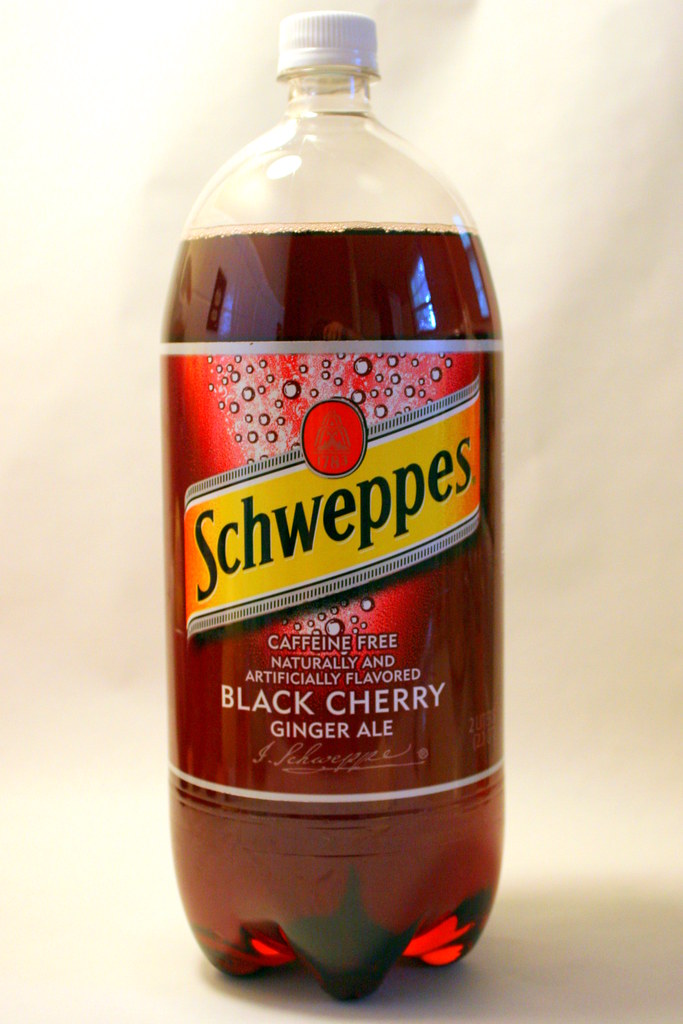
This is the first cocktail developed at the Excelsior House and invention credit goes overwhelmingly to Sarah. Around Christmas we bought a two-liter of Schweppes Black Cherry Flavored Ginger Ale to try out. The soda itself is overly sweet and kind of weird, but we came up with an excellent use for it that burned through an impressive amount of Tanqueray in the process. My apologies for how obscure the soda is. Find it, however, and you're in for a treat.

1 shot Gin
2 parts Black Cherry Ginger Ale
juice squeezed from half a lime
garnish with a maraschino cherry

Serve over ice. In the absence of said rather specific soda, you could improvise with regular black cherry soda and a small piece of fresh ginger muddled into the gin.

The punch of the alcohol and acidity of the lime balances out the soda's cloying sweetness. The combination of juniper, ginger and citrus play out a deft support role underneath the prominent black cherry flavor. The drink is balanced and complex without being overstated. Truth be told, it's kind of addictive.

Tuesday, December 28, 2010

Max's Warm Tonic for Colds

My dad infected the whole family with norovirus. Just when we thought it had burned itself out and I'd made it into the clear, I came down with symptoms when I woke up on Christmas Eve (nausea, sore throat, fever, headache, sleeping a lot). I felt better that night and enjoyed a thoroughly delicious Christmas dinner with family. I woke up Christmas morning at four am to puke and continued to puke until noon.

I made it back to Davis on Sunday and the worst is over, but I apparently got a cold simultaneously (for a second my dad thought my respiratory symptoms ruled out norovirus, but I just got a twofer), so now I have a cough. I made this up a while back as a general cold remedy. Cheers to those of you who also feel like crap.

Add a dollop of honey to a mug of water
Boil in microwave
(Optional) Add some kind of black tea
Squeeze in a slice of lemon or lime
Add a drop of angostura bitters (a full dash if you skipped the tea)

This was originally devised for someone who was morally opposed to tea, but I like a little caffeine in mine. Fun Fact: I've actually used a scaled up version of this for hydration on bike trips. Beats the crap out of water.

Saturday, July 24, 2010

Brewing and Retroactive Idea Theft

Howard and I finally did it. We finally brewed some beer. We bottled it yesterday, so we've just got a few weeks until it's carbonated and ready to drink.

We made two one-gallon batches of my California Sunshine Ale. The first was a simple scale-down of the recipe I posted earlier. The second was a variant that completely dropped Cascade hops for Amarillo.

It's pretty uncommon to brew in one-gallon batches. Practically every recipe online is written for five gallons. Brewing at all is a lot of work, so people try and make it worth their while. Larger batches are also more stable and, according to the owner of our local brew store, a difference of scale changes extraction rates and thereby the recipe requirements.

I decided to brew in small batches knowing full well the reasons it was uncommon. I didn't get into homebrewing to save money. The ingredients for making beer cost roughly half the retail price for buying craft beer from the store. That may sound pretty good, but when I take into account the work and risk involved in the process and the superior quality and variety of beer available at the store, it's barely breaking even. Five gallons makes fifty beers and that is a heck of a lot of any single kind of beer for a person who's accustomed to buying single bottles. The fuzzy feeling that comes from knowing my beer was made with my own hands only gets me so far. I decided to start homebrewing to learn more about beer and to kick around my own recipe ideas. We may have had to borrow Howard's lab scale to measure hops in hundreths of an ounce, but I'm a scientist, after all.


So after one and a half hours of driving and one and a half days' work, Howard and I have twenty-three bottles of beer to show for it and that's fine by me.

Above: Our cooling system to keep the beer around 70 degrees in the middle of the Davis summer (my idea)
Below: Our chicken wire drying rack (Howard's idea)

On a separate note, it has come to my attention that American brewers have been time traveling from years past into our present future and viciously stealing my beer ideas from this blog. It turns out that Cascadian Dark Ale aka Black IPA is an established northwestern variant on the IPA style that uses dark malts to conjure an intimidating color. While it sounds like a lot of breweries are using debittered black malt to give the maximum color without affecting flavor that much, some have actually embraced the pairing of hop bitterness and roasted maltiness.

Also, on the day before we bottled our California Sunshine Ale, I happened across the spitting image of my concept for the beer. Deschutes Brewery's Twilight Summer Ale is an APA that lightens up on the crystal malt, adds something toasty to pair with grilled food and relies on a combination of four hops with emphasis on Amarillo.

To counterbalance said losses from my creative stable, I'd like to present a new beer concept. I was idly reading the ingredient list on Barq's Root Beer and noticed that the last ingredient was acacia. For those of you who don't know, acacia is planted as a shrub all over orange county hillsides for erosion control. It has oval grey leaves and little fuzzy yellow flowers that get pollen all over the place. It has a very distinctive smell, like a dirty, grainy version of some platonic true herb. As soon as I'd read it I started to either imagine or taste it in the Barq's (to my satisfaction).

Acacia would be great in a light summer porter. You heard it from me first, somebody should brew a summer porter with acacia leaves.

Tuesday, June 8, 2010

The Basil Borbeto

I was making mojitos after harvesting Jill's garden with her. I'd used up all my white sugar making a blackberry pie and I was taking advantage of the basil we'd just harvested for the mojitos. I decided to kill the last drops in a handle of bourbon by making a whiskey version for myself. Jack tasted it, exclaimed his love of it "and I don't even like alcohol". He came up with the name you see as the title. So there you go, the Basil Borbeto:

1 Slice of Lime
1 Tbsp Brown Sugar
A few leaves Basil
Ice Cubes
1 Shot Bourbon

Muddle the lime, sugar and basil, then throw the ice and bourbon in and mix. It's kind of like a Mint Julep.

Monday, May 31, 2010

If I Were to Start a Microbrewery

This is one of my dilettantish whims that faces incredible odds of ever seeing fruition. I'm realistic, though, so I decided that if I were to ever seriously talk about starting a microbrewery I'd have to have perfected a couple of homebrew recipes and won a few awards for them. We'll see how far I get, but until then it's way too fun to daydream.

If I were to start a microbrewery I'd call it Beach Cities Brewing. I'd need to find a bar or restaurant to ally myself with and I'd want to round out a selection of thoughtful, innovative beer offerings. To kick around beer ideas and as the natural next step to being as obsessed with beer as I am, I've started researching recipes for typical beers.

Pale Ale (California Sunshine Ale)
I've noticed the classic American Pale Ale is a little too heavy to drink on a hot summer day, but the briskness of the hops always makes me think that it should be more refreshing. I think there's a gaping niche in the American craft beer market for a lighter-bodied pale.

Mad River Brewing makes an Extra Pale Ale, but frankly it's too light, too bready and too innocuous for my taste. What I want in a summer beer is one that's light enough to be quaffable like a macrobrew lager but that pairs well with (especially grilled) food the way amber ales do.

I think the best way to do it would be to combine the significant Cascade dry hopping of pales with small quantities of the darker malts that give that toasted flavor to New Belgium's Fat Tire or Flying Dog's Pale Ale. The loser in the equation would be the crystal (or caramel) malt that gives both amber and pale ale styles their foundational sweetness.

Prototype Pale Ale

Ingredients:
5 lbs Light Malt Extract
2 lbs Sugar (standing in for flaked rice)
1/4 lb Crystal Malt 50L
1/4 lb Carapils
1/4 lb Chocolate Malt

0.25 oz Magnum Hops (60 min)
0.5 oz Perle Hops (30 min)
0.5 oz Cascade Hops (10 min)
0.5 oz Amarillo Hops (10 min)
0.5 oz Cascade Hops (0 min)
1.0 oz Amarillo Hops (0 min)

Optional dry hop of another 1.0 oz Amarillo

Wyeast American Ale Yeast 1056
3/4 cup priming suger

Directions
Put the crushed malt in grain bag and steep for 30 minutes in 1.5 to 2 gallons of water. Heat to approximately 170F (not exceeding 180F), remove grain bag, bring water to boil, add extract and boil one hour adding hops at appropriate times.

Ferment in primary one to two weeks. Watch your ferment temperatures, try to keep them in the 63F to 68F range. (Optional) Dry hop in secondary for one to two weeks. Add priming sugar and bottle
Servings
5 Gallons

Expected stats based on online calculators:
5.3% ABV
36 IBU

This is definitely the first recipe I'm going to try out when I get my hands on some brewing equipment. Firstly because it's the concept I've thought the farthest through and secondly, because ales are usually easier to make and harder to drink large quantities of. It makes sense to brew an especially drinkable ale if you're making 5 gallons at a time.

This prototype represents about three simultaneous experiments: Can a pale ale be essentially watered down and remain compelling? Will chocolate malt mesh with the hard-edged hops that constitute the basis of the classic American pale ale? Do Amarillo hops really taste like grapefruit and do I like them?

Amber Ale
I'd also want to have an Amber in the lineup because it's an awesome food beer and the style I've been most interested in lately. It's also got a lot of flexibility. I've had Ambers that range from toasted and refreshing (New Belgium, Rogue) to borderline creamy (Alaska, Anderson Valley, Full Sail) and I've loved them all. In short, I need something to fill the mid-body, mid-color position in the line-up, but I have no idea how I'll craft something as original and refined as many beers in the style..

Bock (North Swell Bock)
*Pictured: Full-suit clad surfer heading up and over a thick, steely-gray wave*
I'd want to shoot for the gravity of a regular bock, which is considerably heavier than Shiner Bock. Some combination of honey malt, wheat and especially ginger would give it the warmth required to celebrate winter surf.

American India Dark Ale
Once my adoring fanbase develops, there will be an understandable demand for a Beach Cities IPA. I will both sate and confound the hopheads by instead releasing this. Instead of pushing hop complexity, I'd push malt complexity while retaining the generally nuclear malt/hop balance of an IPA. It would mess with IPA doctrine the way Dogfish Head's 90-Minute IPA did, but instead of crisp malt sweetness, I'd go for a rich toasted malt flavor.

Tuesday, April 6, 2010

Sazerac Lemonade

Life has recently thrown me a lot of lemons-- literally. When I went home for spring break I did a bunch of yardwork for my dad and he's been using his tree's Meyer lemons to make lemonade. He wasn't doing anything special, he was just mashing a Meyer into his crystal light to give it some sparkle.

I ended up taking a bunch of lemons home to Davis. Howard brought some regular but ginormous lemons back too and we conducted a bit of a trade. Thus, a couple of nights ago I decided to make some lemonade of my own. I'd been thinking about the flavors for awhile and here's the recipe I came up with.

1 Regular Lemon (sliced across the segments)
Sugar to taste
Water
1 capful Pastis (or other anise-based liquor)
3 dashes Angostura Bitters

Muddle the lemon with the sugar in a measuring cup, adding sugar until the balance is about right. Strain out resulting juice into your iced glass, add water to the measuring cup and repeat until the strained lemonade is the right concentration. Balancing sugar, lemon and water can be tricky. I added some commercial lemonade to even things out. If you're going to be drinking this while doing heavy physical labor, add a pinch of salt. Once you've added the Pastis and bitters it is ready to drink.

I love the Meyer lemon, but its warmth and richness doesn't lend itself to the quenching nature of lemonade. Pastis is watered down and sweetened in France as a refreshing summer drink of its own, but I think Pastis is better suited to a supporting role in drinks. That anise comes across pretty strong. Adding bitters to lemonade is nothing new, but I think it provides the accent needed to make the anise work.

You can tell this recipe owes more to my mixology background than a Betty Crocker cookbook. The ingredient list actually bears considerable resemblance to the Sazerac Cocktail. I'm counting this among my drink posts, but the alcohol content is negligible. For those of you who may be disappointed by that, I recommend dolloping in some whiskey. Bourbon would be classic and Rye wouldn't do badly either.

Saturday, June 27, 2009

Max's Black Bayou

The Black Bayou is a drink inspired by swamp water. Dark, fecund and mysterious, I imagine drinking this with the sunrise after a long night. It tastes dirty in all the right ways. To make, you'll need:

dark roast coffee at room temperature (stale/burnt coffee is fine, just make it strong)
bourbon
pastis or other anise-flavored liquor
peychaud's bitters
preserved fig in syrup

Fill a mug half full of old coffee, toss in a shot of bourbon, a dash of peychaud's, a dollop of pastis (a quarter shot or so) and a preserved fig. Sweeten to taste with fig preserve syrup. Make sure to use strong coffee, otherwise it'll taste a little dilute.

The coffee is earthy, the bourbon is woody, and the anise and bitters are herbal. Don't knock it till you try it. It's really kind of a soothing drink. My thanks to my dad and, as always, the Apple House tasting team for their help.

Tuesday, March 17, 2009

Max's Old-Fashioned Cocktail

Given its name, the Old-Fashioned is unsurprisingly among the most venerated of cocktails. I was initially discouraged by my spectacular failure at making them early last summer (using an abridged form of the IBA recipe). It wasn't until I went home for Christmas break and my Dad made some for the family that it felt like I had even the remotest understanding of the drink.

There are intense debates concerning what constitutes a "real" Old-Fashioned and recipes vary wildly. Some call for many citrus fruits, some call for just a lemon twist for garnish. Some specify that you muddle those garnishes, most not. Some include sweet vermouth, but most only have Maraschino for color. Some demand adding soda water while others damn to hell those infidels who would do so. Bitters are used for most recipes and the whiskey choice varies considerably from Canadian to American Sour Mash to Bourbon to Rye.

My father's recipe included a juiced slice each of lime, lemon and orange, with liberal application of maraschino juice, Jim Beam, and diet 7up. The result was rather confused and watery for my taste, but it did impress on my mind the importance of citrus fruit, the lack of which had doomed my first attempt at the drink. I surveyed the various online recipes and came to understand the ins and outs of making this classic cocktail. The defining principle is the balance of liquor, sour, sweet and bitter within the drink. The resulting drink is too well-rounded to be edgy, but too beautiful to ever truly go out of style.

I put together my own recipe using Meyer Lemons, a citrus fruit that I adore in general and that is particularly suited to Old-Fashions. I found that Rye works better with Meyers' floral aromas and I decided that muddling is deliciously Californian because of the emphasis on fruit. As always, my regards to the Apple House Taste-Testing Team (aka my roommates).

1 large slice Meyer lemon
1 teaspoon granulated white sugar
1 Maraschino cherry
1 teaspoon Maraschino cherry juice (you can substitute the sugar with a couple more teaspoons)
2 dashes bitters
ice
1 shot Old Overholt Rye Whiskey

Add lemon, sugar, cherry, juice and bitters, then muddle ingredients, juicing and crushing the lemon and dissolving the sugar. Mostly fill the glass with ice, then pour whiskey over the concoction and stir till ingredients are mixed and ice equilibriates. Enjoy!

Sunday, December 7, 2008

Max's Christmas Punch

It's that time of year and this is a girl drink we can all rally behind. I came upon this when Jill told me to have a Cran and Vodka and we didn't have any Vodka. I debuted it at my annual Christmakah party last night.
1 shot Rum (any kind)
2 shots Cranberry Juice
2 dashes Angostura Bitters
I always thought Angostura smelled like Christmas, it just took the right setting to bring the Christmas cheer.

Monday, September 29, 2008

Coke and Anise

I haven't stopped tinkering with cocktails. I present to you my Fall invention, the Coke and Anise.
1 shot Brandy
¼ shot Pastis (or other anise-flavored liquor)
2 dashes Peschaud's Bitters
1 ½ shot Coca Cola
Put Pastis and Peschaud's into small glass. Shake brandy with ice and strain into glass. Pour coke down the side of glass.
This owes inspiration to the Sazerac. You'll find it to be more of a sipping drink. The honey note of the Brandy combines with the sweetness of the Coke to play off anise flavor from the Pastis and bitters. It's like some demented derivation of honey with tea.

Saturday, July 19, 2008

The Bitter Max

I invented a drink and I call it the Bitter Max. It is essentially a glorified rum and coke, designed as a way to drink cheap Bacardi rum with utmost style and alarming speed.

To make, take a slice of lime and squeeze it into a small glass with enough aggression to bruise the rind (muddling works well). Drop in the slice, then add two dashes angostura bitters. Fill the glass completely with ice, then pour a shot of white rum over it. Add two equivalents of Coca-Cola and drink once it cools to ice temperature.

The bitterness of the lime rind combines with the bitters and the high alcohol content to make for a strong first sip. Successive sips reveal the drink to be rather quaffable.


I am very proud of my jam jar cocktail glasses and 50mL beaker.