Since before the 1906 earthquake, San Francisco has been reviled by conservative Christians as a place of hedonism. Back then it was nicknamed Frisky City, and not a few religious figures of the time interpreted the great fires that burned the city to the ground as God's retribution against the city's sinfulness, likening it to Sodom and Gomorrah.
Not a whole lot has changed. There continues to be some truth to the characterization of San Franciscans as hedonistic-- we believe in enjoying ourselves and we do. The best word I've found to describe San Franciscans is gay-- in the classic sense (in addition, of course, to the newer sense). On sunny weekend days, San Franciscans dress lightly, fashionably, and in bright colors. They eat brunch with mimosas or seek out the best bakery in town for pastries. They bring their dogs to the park or picnic with friends. San Francisco is truly a gay, happy city. It's also, truly, the most moral city I've ever called home.
San Francisco is a bastion of "radical humanism", as my friend so aptly put it. That lends itself to investing in social programs, ethically produced food and bike lanes. More personally, San Franciscans believe in doing what they enjoy and encouraging others to do the same, whether that be drinking blow-your-mind-good coffee or wearing red pants and a brilliant paisley scarf or having gay sex or smoking weed in the park or getting a sex change or... I think you get the idea.
That may sound dangerously unbounded to people from more religious parts of the country, but it is actually very simply and rigidly bounded by a second principle: not infringing on or diminishing others' happiness. The minute the crazy homeless guy shoves someone is the moment when tolerance turns to intolerance. The minute a public discussion invokes racial epithets is when the eyes of every bystander's eyes darken.
As extensive as San Franciscan acceptance is, the rules of humanism follow right along. Humanism is, after all, a moral tradition at least as venerable as Christianity, predating it by a fair margin. There is no slippery slope here. For example, orgies do happen in San Francisco. They're not commonplace but everyone knows someone who's been to an orgy. However, there is none of the Bacchanalian destructive abandon associated with Roman orgies. Real San Franciscan orgies, by every account I have heard so far, are extremely structured environments. That everyone be safe and comfortable is of primary importance. The implicit assumption is that such a thing is not worth doing if it causes harm. San Franciscan morality is outlined in black and white, just along different lines than conservative Christian morality.
San Francisco's combination of hedonism and moralism is also embodied by the kink community. The Society of Janus describes itself on its website thusly: "SOJ is a not-for-profit, all volunteer, San Francisco-based education
and support organization devoted to the art of safe, consensual and
non-exploitative BDSM." The society's mission is to teach people about BDSM, to share what they enjoy and likely have enjoyed for a long time. My experience reading dating profiles of people so inclined reinforces the impression that people in the kink community treat BDSM with strict sobriety and a careful eye for ethical pitfalls. Bestiality (which conservatives are so fond of mentioning in the same
breath as homosexuality) is not remotely ethical, because an animal cannot give consent.
The BDSM community is only a small part of the city, but that emphasis on ethical behavior characterizes San Franciscans more broadly. Since I have moved here, many things that I have done thoughtlessly
have been questioned by people around me, and discussed reasonably. The extreme moral conscientiousness of this city is remarkable, and the only people I've met of comparable moral conscientiousness are truly devout Christians. The difference is that instead of citing verses to explain why doing a given thing is wrong, San Franciscans will tell you exactly how it hurts people (or animals). Frankly, I find the moral intensity of both church groups and San Franciscans to sometimes be oppressive, but I appreciate the commitment.
San Franciscans are very familiar with how difficult it is to come out of the closet as gay. Every gay person has to deal with a feeling of non-acceptance from society at large, even those who were born and raised by accepting parents in the city itself. Being gay is far more difficult and alienating if someone comes from a conservative Christian family. Gay sons or daughters coming out of the closet to a conservative family risk disownment, but the reality for most gays is more subtle. There will be a certain distance created by the revelation and a certain sustained discomfort for both parties, because neither side can truly accept the other's viewpoint without giving up their own. Religious families are inclined to attempt to persuade their wayward sheep away from "the gay lifestyle". Even if a family resists this impulse, a certain level of frustration is an inevitable product of the rub between religious convictions and gay realities. It is a softer estrangement, but it still leaves lingering damage, damage that any gay person can tell you about (if they're comfortable doing so). Gays who grew up with strong religious convictions are forced into a crisis of faith, as
they try to reconcile the teachings etched into them with their own
nature, and must grapple with religiously-derived guilt. Gays, and San Franciscans more broadly, see firsthand the damage that religion can and does cause. This damage piques our San Franciscan sense of morality. When it comes to gays versus conservative Christianity, there is no question with which side this morality sides.
I think there's an unvoiced sentiment among conservative Christians that true love can only exist in a heterosexual relationship, or that romantic love in a heterosexual relationship is somehow different from romantic love in a gay relationship. We here in Frisky City know differently from experience. Of course, it's not rocket science. For every vocally happy recovering gay who has returned to the fold, there are a million vocally happy practicing gays. San Franciscans know that decisions have consequences, and further they know what decisions have what consequences, because they've tried out the options in true rational humanist fashion. We know that the only way for a gay person to find true romantic love is in a gay relationship, and that finding such love is among the most gratifying and fulfilling things in life. From the perspective of humanism, the truly immoral thing is trying to dissuade people from finding that love.
San Franciscans also know quite well what innocent fun is. This brings me, finally, to Hunky Jesus. The Hunky Jesus Competition, put on by the in-drag charity organization Nuns of Perpetual Indulgence, is innocent fun. The competition may be irreverent, but in San Francisco this is an integral part of its moral appeal. There is a need, particularly in gay San Francisco, to dance on Jesus' grave a little bit, to poke fun, to make light of the force of conservative Christianity, clearly discernible despite the distance (media carries it to us), that presses in on our little bastion of humanism with at best disapproval and at worst unabashed hostility.
That irreverence is entirely harmless unless, say, some idiot would deliberately troll and upset his conservative Catholic uncle by sending him an article about the event. Like I said, I'm not entirely in agreement with San Francisco's intense moralism, but I think I at least understand it. I hope you understand it better now too. San Francisco is a very different world from middle America, but despite both regions' best intentions, they are still one America.
If you visit me on a sunny weekend, I will suggest we get brunch in the Castro and order mimosas and eggs benedict. We can watch people go by, living their lives gaily. I promise you will enjoy it.
Showing posts with label philosophy. Show all posts
Showing posts with label philosophy. Show all posts
Friday, April 5, 2013

Sunday, January 27, 2013
Television in the Twenty-First Century
It didn't come out of a vacuum, of course. The nineties can boast some absolutely stellar television, especially The Simpsons and Seinfeld. However, there is no denying that American television has blossomed in the twenty-first century into true art. It's no longer just a couple of shows or just the comedies that are totally leveling any conception of what could be done on the small screen anymore. American television has gone nuclear. There are shows running right now that stand up to the best of the big screen in terms of brilliance of conception and narrative, and they aren't stopping after a 90-minute run time and they're not running out of ideas. Many of them are hard to watch, but that hasn't stopped at least the dramas from receiving great ratings. Just as with the 60's when the Beatles were able to challenge their audience and still succeed commercially, the American public is keeping right up with the increasingly challenging and complex television being put in front of them.
Before you sicken from my effusive optimism, let me put some names to faces, that I might justify my premise:
Arrested Development
It may not have the overflowing genius of The Simpsons or the gentle extremism of Seinfeld, but Arrested Development stands shoulder-to-shoulder with them on its own terms. It's among the finest dramedies ever made, and certainly the funniest, and that is saying something, because the dramedy is a beautiful invention. Unlike those other two eminent comedies, Arrested Development has a cohesion of purpose and a synergy of interlocking parts that is extremely gratifying-- jokes are carried over entire seasons without dulling or misstepping. Storylines weave in and out and always complement each other. It's also just wickedly, unrelentingly funny. Oh, and something about the image of the show-house on the desolate hillside really resonates with me.
The Wire
This show epitomizes, perhaps better than any other, the extraordinary change that has occurred in television. The show is grim, demanding, proceeds at a glacial pace without ever making an explicit point, and our nation was absolutely enthralled by it. I can't think of any show from the previous century that could compare to its intricacy, subtlety and symbolic depth. It is, quite simply, a show that redefined what was possible in the medium of television. I love how McNulty sometimes comes across as, not quite two-dimensional, but flat in a way that is somehow more genuine than if he were rounded. Real people are simple at the same time they are complex. And of course Omar rocks my socks.
Mad Men
It started with a gimmick, executed with unanticipated commitment-- setting a show in history and letting the characters act culturally backwards in ways the writers knew would bother the audience, but doing so with such a light brushstroke that it felt subversively natural. The rest of the shows I discuss did things that had never been done in television before, but I'm not sure this particular twist has precedent in any medium. Of course, the show is a heck of a lot more than a gimmick. It has this uncanny way of presenting people in single moments. Just as people make all kinds of decisions in real life, Mad Men's characters can be characterized, but not anticipated. Further, their actions don't always have consequences. There isn't really any poetic justice, which turns out to be jarring as fuck. The loose treatment of character makes it nearly impossible to make moral judgements and gives a certain starkness to characters-- when they repeat a bad decision it feels excruciating. It's an intriguing approach to narrative-- almost abdicating narrative. Of course, that is more sensation than reality, as the show is tightly controlled and threads play off one another with worthy synergy. Episodes have themes, but it feels like ambiguity could swallow up anything so simple as a theme at every turn, and there is something thrilling in that. Also Joan. Sometimes I just watch for Joan.
Breaking Bad
Moral ambiguity has been the order of the day for contemporary storytelling. We are no longer content with anti-heroes. We want to see ourselves at our worst. We want to find ourselves doing genuine, unalloyed evil. Breaking Bad takes that farther than any show by following the evolution of Walter White from sympathetic victim to villain, without ever losing the thread of his humanity. The show bears an obvious resemblance to Weeds, but like the drug it's about, it is light-years more intense and dangerous. Where Weeds equivocated or intentionally delayed character progression, Breaking Bad never flinches. If anything, Breaking Bad moves faster than the audience is ready for, giving them the emotional bludgeoning they didn't even know they craved. Of course, it would be disingenuous to describe the show as being about one man's descent. Jesse and his relationship with Walt is fundamental to the show. I've heard people call Jesse the heart of the show and the moral center, and he is, but that is perhaps the most terrifying thing, because in his own way Jesse is also a monster, and unlike Walt we love him without reservations.
There are other shows that probably deserve to be among the ranks of these shows-- West Wing and the Sopranos get a lot of lip service, and in some ways Firefly was the perfect dramedy. There are also a lot of shows that could have never existed ten or fifteen years ago and betray inspiration without the same consistent brilliance as the first tier, like Dexter or Game of Thrones. I've always thought Malcom in the Middle was under-appreciated and I can't pretend to discuss the wonders of modern television without at least name dropping the TV micro-revolution that was Adult Swim. Louie has a breathtaking sincerity that is uncomfortably, unflinchingly real. There is also the holy trinity of cult comedies-- Community, Parks and Rec and 30 Rock-- whose era is finally coming to a close.
I've thought about why television experienced such a revolution around the millenium. I think some credit can be given to reality TV, whose success influenced scripted television-- most notably oh-so-influential The Office. Probably even more important, I suspect, is that DVD sales changed how TV-makers thought about television. Cohesive, broad narratives with long story arcs began to make more sense once people began watching multiple episodes in a sitting, and writers could demand greater attention and devotion from their audience. This made room for the soaring ambitions of shows like The Wire.
I'd like to end this meditation on modern TV's awesomeness by bringing it back to my friend and favorite TV blogger, Myranda, whose tireless championing of and sincere respect for television continues to inspire me. Keep fighting the good fight, Myranda.
Before you sicken from my effusive optimism, let me put some names to faces, that I might justify my premise:
Arrested Development
It may not have the overflowing genius of The Simpsons or the gentle extremism of Seinfeld, but Arrested Development stands shoulder-to-shoulder with them on its own terms. It's among the finest dramedies ever made, and certainly the funniest, and that is saying something, because the dramedy is a beautiful invention. Unlike those other two eminent comedies, Arrested Development has a cohesion of purpose and a synergy of interlocking parts that is extremely gratifying-- jokes are carried over entire seasons without dulling or misstepping. Storylines weave in and out and always complement each other. It's also just wickedly, unrelentingly funny. Oh, and something about the image of the show-house on the desolate hillside really resonates with me.
The Wire
This show epitomizes, perhaps better than any other, the extraordinary change that has occurred in television. The show is grim, demanding, proceeds at a glacial pace without ever making an explicit point, and our nation was absolutely enthralled by it. I can't think of any show from the previous century that could compare to its intricacy, subtlety and symbolic depth. It is, quite simply, a show that redefined what was possible in the medium of television. I love how McNulty sometimes comes across as, not quite two-dimensional, but flat in a way that is somehow more genuine than if he were rounded. Real people are simple at the same time they are complex. And of course Omar rocks my socks.
Mad Men
It started with a gimmick, executed with unanticipated commitment-- setting a show in history and letting the characters act culturally backwards in ways the writers knew would bother the audience, but doing so with such a light brushstroke that it felt subversively natural. The rest of the shows I discuss did things that had never been done in television before, but I'm not sure this particular twist has precedent in any medium. Of course, the show is a heck of a lot more than a gimmick. It has this uncanny way of presenting people in single moments. Just as people make all kinds of decisions in real life, Mad Men's characters can be characterized, but not anticipated. Further, their actions don't always have consequences. There isn't really any poetic justice, which turns out to be jarring as fuck. The loose treatment of character makes it nearly impossible to make moral judgements and gives a certain starkness to characters-- when they repeat a bad decision it feels excruciating. It's an intriguing approach to narrative-- almost abdicating narrative. Of course, that is more sensation than reality, as the show is tightly controlled and threads play off one another with worthy synergy. Episodes have themes, but it feels like ambiguity could swallow up anything so simple as a theme at every turn, and there is something thrilling in that. Also Joan. Sometimes I just watch for Joan.
Breaking Bad
Moral ambiguity has been the order of the day for contemporary storytelling. We are no longer content with anti-heroes. We want to see ourselves at our worst. We want to find ourselves doing genuine, unalloyed evil. Breaking Bad takes that farther than any show by following the evolution of Walter White from sympathetic victim to villain, without ever losing the thread of his humanity. The show bears an obvious resemblance to Weeds, but like the drug it's about, it is light-years more intense and dangerous. Where Weeds equivocated or intentionally delayed character progression, Breaking Bad never flinches. If anything, Breaking Bad moves faster than the audience is ready for, giving them the emotional bludgeoning they didn't even know they craved. Of course, it would be disingenuous to describe the show as being about one man's descent. Jesse and his relationship with Walt is fundamental to the show. I've heard people call Jesse the heart of the show and the moral center, and he is, but that is perhaps the most terrifying thing, because in his own way Jesse is also a monster, and unlike Walt we love him without reservations.
There are other shows that probably deserve to be among the ranks of these shows-- West Wing and the Sopranos get a lot of lip service, and in some ways Firefly was the perfect dramedy. There are also a lot of shows that could have never existed ten or fifteen years ago and betray inspiration without the same consistent brilliance as the first tier, like Dexter or Game of Thrones. I've always thought Malcom in the Middle was under-appreciated and I can't pretend to discuss the wonders of modern television without at least name dropping the TV micro-revolution that was Adult Swim. Louie has a breathtaking sincerity that is uncomfortably, unflinchingly real. There is also the holy trinity of cult comedies-- Community, Parks and Rec and 30 Rock-- whose era is finally coming to a close.
I've thought about why television experienced such a revolution around the millenium. I think some credit can be given to reality TV, whose success influenced scripted television-- most notably oh-so-influential The Office. Probably even more important, I suspect, is that DVD sales changed how TV-makers thought about television. Cohesive, broad narratives with long story arcs began to make more sense once people began watching multiple episodes in a sitting, and writers could demand greater attention and devotion from their audience. This made room for the soaring ambitions of shows like The Wire.
I'd like to end this meditation on modern TV's awesomeness by bringing it back to my friend and favorite TV blogger, Myranda, whose tireless championing of and sincere respect for television continues to inspire me. Keep fighting the good fight, Myranda.
Sunday, January 13, 2013
Humans: just incredibly awesome Animals
Reading a post by my friend Rob, I couldn't help but be struck at the unwitting revelation of a sentence of his: "The paths of insensitivity and self-delusion this conceit [that humans aren't animals] has led to are so enormous, a comprehensive study of the subject would be all the human history one would need to read."
The indication being, of course, that anything about human history
worth knowing has involved humans acting like we weren't animals. Think
about that for a minute.
I actually really love the aspiration of humans to transcend animal nature. I realize that it is an aspiration rather than a reality and that it could be viewed as a quaint ambition, but it's only quaint when you exclude from consideration all the incredible things that we have done as animals, aided by a philosophy that we are different. We are, of course, very different. No other animal has even approached our impact, our control over our surroundings, or our understanding of ourselves. We've driven more species to extinction than anything short of a natural catastrophe. I also can't think of a single species on whom so many other species are dependent-- we are the most crucial of all keystone species in this modern ecology.
There is no species more altruistic than us or more cooperative. It boggles my mind that we continue to expand our population logarithmically (for the last 15,000 years at least), drastically change our means of living, habitation and social organization and somehow we don't all kill each other like rats. In spite of these pressures, not to mention the availability of incredibly lethal weapons, we instead continue kill each other less, year after year, decade after decade, century after century. In spite of our incredible population density we're also getting sick less and in spite of the incredible resource load we represent on the world we're permitting relatively fewer and fewer of our fellow humans to go hungry.
"Denial of our animal nature" is just an ungenerous rewording of "aspiring higher than the rest of the animal kingdom". We don't think of ourselves as animals, not because we're not animals, but because we have found that it is in what distinguishes us from the rest of the animal kingdom that makes us wonderful, that makes us worth reading about.
I actually really love the aspiration of humans to transcend animal nature. I realize that it is an aspiration rather than a reality and that it could be viewed as a quaint ambition, but it's only quaint when you exclude from consideration all the incredible things that we have done as animals, aided by a philosophy that we are different. We are, of course, very different. No other animal has even approached our impact, our control over our surroundings, or our understanding of ourselves. We've driven more species to extinction than anything short of a natural catastrophe. I also can't think of a single species on whom so many other species are dependent-- we are the most crucial of all keystone species in this modern ecology.
There is no species more altruistic than us or more cooperative. It boggles my mind that we continue to expand our population logarithmically (for the last 15,000 years at least), drastically change our means of living, habitation and social organization and somehow we don't all kill each other like rats. In spite of these pressures, not to mention the availability of incredibly lethal weapons, we instead continue kill each other less, year after year, decade after decade, century after century. In spite of our incredible population density we're also getting sick less and in spite of the incredible resource load we represent on the world we're permitting relatively fewer and fewer of our fellow humans to go hungry.
"Denial of our animal nature" is just an ungenerous rewording of "aspiring higher than the rest of the animal kingdom". We don't think of ourselves as animals, not because we're not animals, but because we have found that it is in what distinguishes us from the rest of the animal kingdom that makes us wonderful, that makes us worth reading about.
Saturday, August 4, 2012
How to Vote Like a Christian
Voting morally is an essential duty of every true Christian. If your church's congress or Pope or local Priest/Minister make suggestions it's easy, but if they don't provide sufficiently extensive guidance or if you want to figure out for yourself how to best carry out God's will, you may find yourself in a quandary.
For all the lip service that is lent to the Ten Commandments being the foundation of good law and for all the tablets and inscriptions of those commandments in American houses of law, you may be shocked to learn that only two of the commandments are written into law: thou shalt not steal and thou shalt not kill. Considering that America is an overwhelmingly Christian nation, it seems puzzling that we enforce only the two commandments that every nation on earth, Christian and heathen alike, enforce.
There are a few famous examples of Christian-run governments that attempted to enforce God's law to a more thorough extent, but unfortunately they were infamously harsh and/or authoritarian (Geneva circa the Reformation comes to mind). Let us dispense with past mistakes and begin anew.
Sodomy and all manner of sexual perversions should of course be prohibited. Until these things can be outlawed, nothing resembling acceptance or tolerance of such behavior should ever be passed into law. This behavior is never okay and we as Christians should make this holy truth clear with our votes.
For all the lip service that is lent to the Ten Commandments being the foundation of good law and for all the tablets and inscriptions of those commandments in American houses of law, you may be shocked to learn that only two of the commandments are written into law: thou shalt not steal and thou shalt not kill. Considering that America is an overwhelmingly Christian nation, it seems puzzling that we enforce only the two commandments that every nation on earth, Christian and heathen alike, enforce.
There are a few famous examples of Christian-run governments that attempted to enforce God's law to a more thorough extent, but unfortunately they were infamously harsh and/or authoritarian (Geneva circa the Reformation comes to mind). Let us dispense with past mistakes and begin anew.
Unfortunately, modern American law only partially encourages observance of God's commandment "thou shalt not kill". We
should do everything in our power to make abortion illegal once again,
but that's just the beginning of voting according to God's law.
Just as Jesus stayed an entire crowd's hands by saying "He who is without sin among you, let him be the first to throw a stone at her", so too should we depart from the institution of capital punishment, as the blood of those criminals is on all of our hands, as voters.
We
should also vote against unnecessary warfare. It is one thing to
protect ourselves from a genuine invasion and quite another to bomb vast
countrysides on the other side of the world, killing tens of thousands
of innocents, for some theoretical insulation from a repeat of 9/11,
which killed a relatively paltry two thousand. This sort of violence is
appalling and decidedly unChristian.
As
taxpayers are currently footing the bill for the massive killing
machine that is our military and this military facilitates an aggressive
attitude toward international politics, we should also downsize our
military to one reflective of an attitude of self-defense, not of
aggressive enforcement of worldwide dominance. This will also promote a
greater sense of humility across our nation. Our international actions
this past decade have frequently been grounded in pride, selfish fear
and an insufficient love of our neighbors. Downsizing our military budget by an order of magnitude would
go a long way towards stifling those American sins.
Sodomy and all manner of sexual perversions should of course be prohibited. Until these things can be outlawed, nothing resembling acceptance or tolerance of such behavior should ever be passed into law. This behavior is never okay and we as Christians should make this holy truth clear with our votes.
Even more important for protecting our country's social fabric, though, is preventing divorce and sex before marriage-- the two biggest contributors to social fragmentation and destruction of the family unit. The legalization of "no fault" divorce across states in the early 1970's had an appalling affect on the social fabric of America. One of the most important steps to bringing that fabric back together is going to be reversing that legislation and forcing married couples to work things out.
The problem of sex before marriage is a more difficult snarl to untangle. Abstinence-only sex education has done little or nothing to stem the rising tide of babies born out of wedlock. There is a deeper root cause at work here: young people are waiting until very late in their lives to marry and have children intentionally, and they are succumbing to temptation in the meantime. This is a result of a shifting economy, but Mormons have demonstrated that marrying early and having children within wedlock is feasible. Mormons consequently have a much lower rate of out-of-wedlock births. We should start by prohibiting sex before marriage and then institute a program to encourage marrying early, perhaps just out of high school as was typical in the 1950's.
An important topic of the Lord's teachings that we also need to take into consideration at the voting booth is that of poverty and wealth. Jesus said "it is easier for a camel to go through the eye of a needle than for a rich man to enter the kingdom of God." He also suggested to his apostles, "If you would be perfect, go, sell what you possess and give to the poor, and you will have treasure in heaven." Between these two quotes I think we have a clear God-given mandate for how to structure our government's tax and entitlement systems.
First of all, American government should take money from the rich until they are no longer rich, and in so doing save their souls. We should then take this wealth and distribute it to the poor and save America's soul. It is very simple and it is very much in keeping with the gospel. The fact that America, as the most God-fearing of first world countries, does the least redistribution of wealth in this most moral of directions quite frankly boggles my mind.
These are the first and foremost things we need to vote for to save our souls and the soul of our nation. There are many further things we could do, such as formally recognizing America as a Christian nation and enforcing all ten of the commandments, but those must wait until America is ready for our holy vision. Baby steps, my fellow Christians, baby steps.
For those of you who enjoyed this dose of common sense, I recommend checking out my friend Rob's Reasonable Person's Guide to the Bible.
Friday, August 3, 2012
Gay Marriage Part 2: After Reason
I have tried approaching this topic reasonably. I attempted to craft a logical, facts-based argument in favor of gay marriage. The impact was unfortunately negligible. My mistake was in treating gay marriage as an issue for which reason plays any role. Living in San Francisco has also changed my attitude towards the issue. I had spent a lot of energy trying to understand the conservative viewpoint, but it turned out I didn't adequately understand the liberal viewpoint. The following is an adapted version of a letter I wrote to my uncle. Pierre, I apologize for singling you out when you are no more guilty than anyone on your side, you were just the catalyst.
I know it's surprising and potentially upsetting to think that so many Catholics are ignoring the Pope, but excluding Hispanics from the statistics in the article wasn't actually that disingenuous. The second article I sent says, "For all the opposition by leaders in the Catholic Church, their flock isn’t following. 'Nearly six-in-ten white non-Hispanic Catholics (59%) favor allowing gays and lesbians to marry,' Pew reports, 'as do 57% of Hispanic Catholics.' This shouldn’t come as too surprising. Catholics have been leading the way on same-sex marriage for some time now."
I agree that the emphasis on white Catholics of the first article raises an eyebrow, but at a 2% difference it's hardly something to get up in arms about. Considering that both Hispanic Catholics and non-Hispanic Catholics are roughly 10% more in favor than the national average of 48% from the same report, it doesn't seem far-fetched to generalize that Catholics as a group are a major demographic leading the charge on gay marriage.
As to the question of whether or not these are "real" Catholics, the pollsters do their best, but it would be much more difficult/expensive to parse an additional variable for cross-control (ie. churchgoing rates of respondents). By the flip side of the coin, are you really so interested in disowning the vast majority of those who call themselves Catholic? "You're not a real Catholic unless you single-issue-vote for theocracy, have had sex the same number of times you've had children and flagellate yourself every morning before coffee."
The argument that legalizing gay marriage represents a slippery slope or opens a Pandora's box is absurd. California or New York would sooner pass Jim Crow laws than legalize first cousins marrying (both are cut from the same Southern cloth, in our minds). There is no other "rights" group looking for an expansion of marriage law with even a trace of the sincerity, fervor or political legitimacy of the gay rights movement.
Based on your own very technical definition of "deviant", I will disagree that gay marriage is "merely an attempt to make themselves non-deviant." By your definition, they will never be "non-deviant", but they can be treated like first-class citizens and granted rights that cost the rest of us nothing. Gays are looking for their (theoretically secular) government to acknowledge that they exist in the most sensible legal way available. Don't tell me extensive legal documents or civil unions are the same thing. They are clumsy workarounds to a glaring hole in contemporary law. The hole is one generated by a social reality that's at least 40 years old: gay people act remarkably like heterosexual people. They find someone they want to spend their lives with, they own houses together, they adopt children, etcetera. The elegant solution staring us in the face is legal marriage-- but that's not the argument to endorse it. The real argument to endorse it is that to willfully ignore and actively lobby against that elegant solution is insulting. You're telling people, "fuck you, this may be a secular government, but it's a democracy and you will play your charade of open, legally-recognized homosexuality over my dead body and every other REAL christian this country can muster."
Do you have any idea how ugly your side is? Do you have any idea how many people hate Middle America, the Pope, Jesus because of people like you? I have heard so many people in this city speak fervently about how ugly religion is and, coming from my background, I didn't understand at first. Living here for awhile you realize that nobody cares if a person gay. People don't play guessing games, they don't gawk, they don't ask, they just don't care. That is true non-judgement, not the silly mainline christian charade of "hate the sin, love the sinner". Do you have any idea how liberating, how utopian that feels, even to someone who isn't gay? It becomes very easy to understand why people here think of Middle America as a hell pit of judgement and scorn. I've seen it from both sides and I know your heart is in the right place, but I understand people here when they wrinkle their nose at the idea of living in Louisiana-- too much racism and religious zealots and judgement, they say-- and it's true! Isn't judgement for the afterlife? When did Jesus say that good people should tell other people how to live with their words and, when that becomes socially uncouth, with their votes? Y'know, I don't even care what Jesus said, because that wouldn't make it less ugly.
I know it's surprising and potentially upsetting to think that so many Catholics are ignoring the Pope, but excluding Hispanics from the statistics in the article wasn't actually that disingenuous. The second article I sent says, "For all the opposition by leaders in the Catholic Church, their flock isn’t following. 'Nearly six-in-ten white non-Hispanic Catholics (59%) favor allowing gays and lesbians to marry,' Pew reports, 'as do 57% of Hispanic Catholics.' This shouldn’t come as too surprising. Catholics have been leading the way on same-sex marriage for some time now."
I agree that the emphasis on white Catholics of the first article raises an eyebrow, but at a 2% difference it's hardly something to get up in arms about. Considering that both Hispanic Catholics and non-Hispanic Catholics are roughly 10% more in favor than the national average of 48% from the same report, it doesn't seem far-fetched to generalize that Catholics as a group are a major demographic leading the charge on gay marriage.
As to the question of whether or not these are "real" Catholics, the pollsters do their best, but it would be much more difficult/expensive to parse an additional variable for cross-control (ie. churchgoing rates of respondents). By the flip side of the coin, are you really so interested in disowning the vast majority of those who call themselves Catholic? "You're not a real Catholic unless you single-issue-vote for theocracy, have had sex the same number of times you've had children and flagellate yourself every morning before coffee."
The argument that legalizing gay marriage represents a slippery slope or opens a Pandora's box is absurd. California or New York would sooner pass Jim Crow laws than legalize first cousins marrying (both are cut from the same Southern cloth, in our minds). There is no other "rights" group looking for an expansion of marriage law with even a trace of the sincerity, fervor or political legitimacy of the gay rights movement.
Based on your own very technical definition of "deviant", I will disagree that gay marriage is "merely an attempt to make themselves non-deviant." By your definition, they will never be "non-deviant", but they can be treated like first-class citizens and granted rights that cost the rest of us nothing. Gays are looking for their (theoretically secular) government to acknowledge that they exist in the most sensible legal way available. Don't tell me extensive legal documents or civil unions are the same thing. They are clumsy workarounds to a glaring hole in contemporary law. The hole is one generated by a social reality that's at least 40 years old: gay people act remarkably like heterosexual people. They find someone they want to spend their lives with, they own houses together, they adopt children, etcetera. The elegant solution staring us in the face is legal marriage-- but that's not the argument to endorse it. The real argument to endorse it is that to willfully ignore and actively lobby against that elegant solution is insulting. You're telling people, "fuck you, this may be a secular government, but it's a democracy and you will play your charade of open, legally-recognized homosexuality over my dead body and every other REAL christian this country can muster."
Do you have any idea how ugly your side is? Do you have any idea how many people hate Middle America, the Pope, Jesus because of people like you? I have heard so many people in this city speak fervently about how ugly religion is and, coming from my background, I didn't understand at first. Living here for awhile you realize that nobody cares if a person gay. People don't play guessing games, they don't gawk, they don't ask, they just don't care. That is true non-judgement, not the silly mainline christian charade of "hate the sin, love the sinner". Do you have any idea how liberating, how utopian that feels, even to someone who isn't gay? It becomes very easy to understand why people here think of Middle America as a hell pit of judgement and scorn. I've seen it from both sides and I know your heart is in the right place, but I understand people here when they wrinkle their nose at the idea of living in Louisiana-- too much racism and religious zealots and judgement, they say-- and it's true! Isn't judgement for the afterlife? When did Jesus say that good people should tell other people how to live with their words and, when that becomes socially uncouth, with their votes? Y'know, I don't even care what Jesus said, because that wouldn't make it less ugly.
Monday, January 2, 2012
Maturity
It started maybe a year ago, after I'd just finished my first real relationship and gotten my first real job. People started commenting about how I much had matured. They talked about how I let stupid arguments go unargued or how my writing on this blog had become more sophisticated.
I am twenty-four years old. People rely on me. I do genuinely "uncle" things like teach my niece and nephews how to build a fire, paddle a canoe and drive a vehicle. When I went to Louisiana for the summer I picked up social obligations without comment or awkwardness. I care about how much money I make. I complain about aches and pains. I'm not afraid to touch any bodily fluid. I enjoy talking about relationship issues with my friends, including the increasingly prominent topic of marriage. I drink freely at family events without embarrassment. These, I've found, are hallmarks of maturity.
The realization that I am becoming mature contains, of course, an element of terror. Embarrassing health problems, declining energy levels, the nine-to-five workday and the alarming acceleration of time's passage all weigh heavily on my soul, not to mention the loss of the peculiar brand of frenetic magic I brandished in this blog's earliest prose. The person I was in high school, the radical, has given way to the moderate and that sense of ceaseless, inspired warfare has gone with it. Or rather, it sputters rather than roars. My cutting word and desire to change the world has not diminished, but it is wielded casually now, without pretense or fervor. These are sad things on their own, but make no mistake: I am proud of the person I've become and I am happy to have become it. It took time and concerted effort to arrive where I am now and that arrival is not without its rewards.
The most important rewards, of course, are trust and respect. I've realized that prestige in adulthood is far more dependent upon being a person of character than I'd imagined in childhood. For someone without particularly stellar career prospects, this is very good news.
More intangibly than trust and respect is an increasingly persistent sense of grace. There is an ease that comes from knowing the world and what I'm capable of. I still haven't found my occupational place in the world, but I have found my personal place. I am a good friend, an affectionate lover, a critic, a thinker and a dilettante.
I know that there are much more interesting and intelligent people in this world, but I am comfortable that my talents are worthy enough to merit raising my voice. I am not satisfied by boring people or interesting people holding themselves to low standards. I am an asshole, particularly in that regard. I try not to be a hypocrite.
I will have children. They will consume much of my life and drive me crazy. They will also be awesome. I will get old and feeble and, if possible, more curmudgeony. People will silently laugh at me for things I am not aware of and audibly laugh at me for things I cannot control. I will not grow taller. I will continue to grow more hairy.
I am at peace with all of these things. That may be the most telling part of all of this. What happened to going down kicking and screaming? When did I become so irritatingly pragmatic? Clearly, I am getting old.
I am twenty-four years old. People rely on me. I do genuinely "uncle" things like teach my niece and nephews how to build a fire, paddle a canoe and drive a vehicle. When I went to Louisiana for the summer I picked up social obligations without comment or awkwardness. I care about how much money I make. I complain about aches and pains. I'm not afraid to touch any bodily fluid. I enjoy talking about relationship issues with my friends, including the increasingly prominent topic of marriage. I drink freely at family events without embarrassment. These, I've found, are hallmarks of maturity.
The realization that I am becoming mature contains, of course, an element of terror. Embarrassing health problems, declining energy levels, the nine-to-five workday and the alarming acceleration of time's passage all weigh heavily on my soul, not to mention the loss of the peculiar brand of frenetic magic I brandished in this blog's earliest prose. The person I was in high school, the radical, has given way to the moderate and that sense of ceaseless, inspired warfare has gone with it. Or rather, it sputters rather than roars. My cutting word and desire to change the world has not diminished, but it is wielded casually now, without pretense or fervor. These are sad things on their own, but make no mistake: I am proud of the person I've become and I am happy to have become it. It took time and concerted effort to arrive where I am now and that arrival is not without its rewards.
The most important rewards, of course, are trust and respect. I've realized that prestige in adulthood is far more dependent upon being a person of character than I'd imagined in childhood. For someone without particularly stellar career prospects, this is very good news.
More intangibly than trust and respect is an increasingly persistent sense of grace. There is an ease that comes from knowing the world and what I'm capable of. I still haven't found my occupational place in the world, but I have found my personal place. I am a good friend, an affectionate lover, a critic, a thinker and a dilettante.
I know that there are much more interesting and intelligent people in this world, but I am comfortable that my talents are worthy enough to merit raising my voice. I am not satisfied by boring people or interesting people holding themselves to low standards. I am an asshole, particularly in that regard. I try not to be a hypocrite.
I will have children. They will consume much of my life and drive me crazy. They will also be awesome. I will get old and feeble and, if possible, more curmudgeony. People will silently laugh at me for things I am not aware of and audibly laugh at me for things I cannot control. I will not grow taller. I will continue to grow more hairy.
I am at peace with all of these things. That may be the most telling part of all of this. What happened to going down kicking and screaming? When did I become so irritatingly pragmatic? Clearly, I am getting old.
Saturday, December 3, 2011
Not-Ends
In the tradition of Rob's... except not necessarily self-contained.
I really don't want to be the one to say it and I'll keep trying it just in case my tastebuds change, but I'd rather drink whiskey and eggnog separately than drink the two mixed together.
While by now it seems to be a truism that the actions of Lt. John Pike and UC Davis Chancellor Katehi's role "tarnished the reputation of the school", the event produced more positive exposure for the movement and for UC Davis than any other action possibly could have.
In the context of a relationship, it does not count as cuddling unless there is boob contact
While many disbelieve that human existence is doomed to be an awkward compromise, three excellent illustrations of that truth exist right under our noses-- jealousy, pain at childbirth (itself the result of an awkward anatomical compromise) and the fact that men are not multiorgasmic. This gives me a much clearer understanding of what heaven is supposed to be like.
I hated and despised Plato until someone pointed out the importance of his concept of ideal forms to Christianity (particularly Good vs Evil and Heaven), at which point I quickly began to realize how ubiquitous and fundamental Platonic theory is in modern thought.
The desire for conceptual elegance is among the greatest enemies of truth, but also among the most important tools for truth's discovery and conveyance.
Hippyism's ideology owes way too much to the aggressive moralism of Christianity to ever be truly at peace with Buddhism.
Somebody asked me if I had any black friends and I was like, "I had one until I stole his girlfriend." It was such a sucker question. I'm just happy I had a sucker answer on hand to reply with.
Technically, my old roommate Mereb is also black, but he's a second-gen Eritrean hippy. I feel like what people usually mean by "black" is having an African-American accent, which Mereb definitely does not have. Mereb just has a lisp.
The ancient Greeks admirably demonstrate to us how useful deities and religion are as language conventions even in the absence of belief, but contemporary social taboos among nonbelievers prevent us from making use of the gorgeous Christian-derived language conventions that are so common in nineteenth century writing.
Now, a quote from Moby Dick:
"The act of paying is perhaps the most uncomfortable affliction that the two orchard thieves entailed upon us. But being paid,--what will compare with it? The urbane activity with which a man receives money is really marvelous, considering that we so earnestly believe money to be the root of all earthly ills, and that on no account can a monied man enter heaven. Ah! How cheerfully we consign ourselves to perdition!"
I really don't want to be the one to say it and I'll keep trying it just in case my tastebuds change, but I'd rather drink whiskey and eggnog separately than drink the two mixed together.
While by now it seems to be a truism that the actions of Lt. John Pike and UC Davis Chancellor Katehi's role "tarnished the reputation of the school", the event produced more positive exposure for the movement and for UC Davis than any other action possibly could have.
In the context of a relationship, it does not count as cuddling unless there is boob contact
While many disbelieve that human existence is doomed to be an awkward compromise, three excellent illustrations of that truth exist right under our noses-- jealousy, pain at childbirth (itself the result of an awkward anatomical compromise) and the fact that men are not multiorgasmic. This gives me a much clearer understanding of what heaven is supposed to be like.
I hated and despised Plato until someone pointed out the importance of his concept of ideal forms to Christianity (particularly Good vs Evil and Heaven), at which point I quickly began to realize how ubiquitous and fundamental Platonic theory is in modern thought.
The desire for conceptual elegance is among the greatest enemies of truth, but also among the most important tools for truth's discovery and conveyance.
Hippyism's ideology owes way too much to the aggressive moralism of Christianity to ever be truly at peace with Buddhism.
Somebody asked me if I had any black friends and I was like, "I had one until I stole his girlfriend." It was such a sucker question. I'm just happy I had a sucker answer on hand to reply with.
Technically, my old roommate Mereb is also black, but he's a second-gen Eritrean hippy. I feel like what people usually mean by "black" is having an African-American accent, which Mereb definitely does not have. Mereb just has a lisp.
The ancient Greeks admirably demonstrate to us how useful deities and religion are as language conventions even in the absence of belief, but contemporary social taboos among nonbelievers prevent us from making use of the gorgeous Christian-derived language conventions that are so common in nineteenth century writing.
Now, a quote from Moby Dick:
"The act of paying is perhaps the most uncomfortable affliction that the two orchard thieves entailed upon us. But being paid,--what will compare with it? The urbane activity with which a man receives money is really marvelous, considering that we so earnestly believe money to be the root of all earthly ills, and that on no account can a monied man enter heaven. Ah! How cheerfully we consign ourselves to perdition!"
Wednesday, November 30, 2011
Change is Happening
This is an exciting time to be a citizen of the world right now, but it's also an abjectly terrifying time.
If you, like me, have largely slept the slumber of apathy for most of the last decade, now is the time to awaken. Important things are happening across the world and here at home. This is the most formative moment in world and national history since the fall of Communism in 1989 or the protests of 1967. At stake is no less than the new world order. If you've ever wanted to change the world, now is your window of opportunity to do so. Change is happening faster than I ever thought possible.
In the last year, three Arab countries have overthrown their government to set up democracies. The European Union is skirting the precipice of either economic collapse or essentially making the equivalent leap that the United States made from the Articles of Confederation to the Constitution. Six Tibetan monks have immolated themselves in protest against brutal Chinese rule. In December Hillary Clinton will be the first Secretary of State to visit Burma in over fifty years. USA-Pakistan relations have nearly completely deteriorated. The USA will be stationing military presence in Australia to counter expanding Chinese ambitions. Mexican protesters are calling for an end to the war on drugs. WikiLeaks and Julian Assange have been brought to their knees. Activity from Anonymous has exploded. Scores of repressive regimes are making concessions like allowing free elections and rolling back censorship. Scores of countries (including some of the same ones liberalizing) stand on the precipice of civil war. Occupy- and Indignants-inspired protests have spread to 951 cities and 82 countries.
In more local news, Congress has been locked in political gridlock for the last year, apparently completely incapable of changing the budget from a course of economic stagnation and extraordinary debt. Occupy Wall Street is fighting for a complete reevaluation of the structure of American democracy. A bill is going through Congress with evidently enthusiastic bipartisan support that will fundamentally change the relationship between government and internet, allowing the government to block entire websites and making it a felony to stream or view copyrighted material --like listening to a song or watching a clip of a TV show on YouTube. Another bill going though Congress seeks to define America as a warzone and thereby authorize the military to arrest American citizens on American soil and hold them captive indefinitely without trial, making it the natural successor to the PATRIOT Act and step two on the road to authoritarianism.
At stake is freedom, justice and the financial future of the world. Become aware. Raise your voice. Take action. Utilize the enormous mobilizing potential of the Internet. Don't forget to think. Terrible things are about to happen. Amazing things are about to happen. The world stands on the tip of a double-edged sword. Don't forget to think, but by all that is holy, participate!
In the last year, three Arab countries have overthrown their government to set up democracies. The European Union is skirting the precipice of either economic collapse or essentially making the equivalent leap that the United States made from the Articles of Confederation to the Constitution. Six Tibetan monks have immolated themselves in protest against brutal Chinese rule. In December Hillary Clinton will be the first Secretary of State to visit Burma in over fifty years. USA-Pakistan relations have nearly completely deteriorated. The USA will be stationing military presence in Australia to counter expanding Chinese ambitions. Mexican protesters are calling for an end to the war on drugs. WikiLeaks and Julian Assange have been brought to their knees. Activity from Anonymous has exploded. Scores of repressive regimes are making concessions like allowing free elections and rolling back censorship. Scores of countries (including some of the same ones liberalizing) stand on the precipice of civil war. Occupy- and Indignants-inspired protests have spread to 951 cities and 82 countries.
In more local news, Congress has been locked in political gridlock for the last year, apparently completely incapable of changing the budget from a course of economic stagnation and extraordinary debt. Occupy Wall Street is fighting for a complete reevaluation of the structure of American democracy. A bill is going through Congress with evidently enthusiastic bipartisan support that will fundamentally change the relationship between government and internet, allowing the government to block entire websites and making it a felony to stream or view copyrighted material --like listening to a song or watching a clip of a TV show on YouTube. Another bill going though Congress seeks to define America as a warzone and thereby authorize the military to arrest American citizens on American soil and hold them captive indefinitely without trial, making it the natural successor to the PATRIOT Act and step two on the road to authoritarianism.
At stake is freedom, justice and the financial future of the world. Become aware. Raise your voice. Take action. Utilize the enormous mobilizing potential of the Internet. Don't forget to think. Terrible things are about to happen. Amazing things are about to happen. The world stands on the tip of a double-edged sword. Don't forget to think, but by all that is holy, participate!
Monday, November 28, 2011
Try Anything Once
When my sister and I were growing up we couldn't stand to eat certain foods. Brussel sprouts, onions and tomatoes were a few of my personal enemies. Our parents would good-naturedly lecture us about how as you get older, your taste buds change and you grow to like things you once hated. While they tolerated and accommodated a certain amount of our stonewalling, at least once a year my mom or dad would say, "Just eat one bite. You can't have dessert until you at least try it." Try we would. Then we usually retched, spit it out or just made a horrible face. With parents satisfied, life would go on.
Somewhere along the line I remember my mom intoning with an unmistakable air of pride that we weren't picky eaters compared to most of our friends. We ate seafood, most vegetables and a host of gourmet and ethnic food that our parents had been gradually introducing us to. Among the mythology of my childhood was a story about me as a toddler, picking apart sushi rolls. When my parents were distracted, my two-year-old-self snatched up a ball of wasabi and swallowed it entirely. My dad still loves to describe the look on my face and how, admirably, I didn't even cry.
Dad instilled in me an enthusiasm for spicy food. I originally approached it as a macho thing. I'd sneer at my sister for complaining about spiciness and load my gumbo with as much Tabasco as I could stand. I remember, in a Chinese restaurant, bravely trying one of those Szechuan peppers after seeing my dad toss a couple back. Sometimes Bri and I would dare each other to eat one. To this day I occasionally eat a Szechuan pepper, just for kicks. The sensation is always one of terrible burning, but you never know if your taste buds have changed. A behavioral psychologist would say that in my family the social dividends of brave experimentalism outweighed the danger of an unpleasant taste.
Once our parents divorced, Bri and I's cultivated non-pickiness became tangibly useful. Our bachelor Dad would take us to Costco for a food run. He'd tell us to "get kid food" and we'd come back with boxes of fruit loops, "granola bars" made mostly of corn syrup and puffed rice and veritable tubs of jelly bellies, gummi worms, etc. Dad would buy it unquestioningly. If dinners weren't consistently a family affair of meat and vegetables, we might have ended up inches shorter than we are today. When the "kid food" ran out, as it inevitably did, we resorted to experimenting with Dad's leftovers or tolerating his offered concoctions, even violating the breakfast-must-be-sweet principle universally understood by children across America as sacrosanct.
Thus it was that open-mindedness established itself as not only a source of pride for Bri and I, but as a necessity for survival. Experimentalism became a sort of religion for us, a direct product of our father's influence. Chicken feet, pig's ear, pigeon, escargot, beef tongue, raw oysters (<3!) and all forms of sushi were things we not only ate, but actively sought out to try. By the time I was in high school, our open-minded food tastes were integral to our self-identities and our family culture.
It was about that time that my dad organized a multi-week backpacking trip to Wyoming with his longtime friend Jack Kisslinger. For that trip, we treated him as family. In restaurants, when Bri or I requested a taste of Jack's meal, we had no expectation that he might refuse. We took it for granted that everyone was entitled to a bite of each other person's meal. Agreeable Jack gracefully adapted to this after a few nights of confusion. Bri and I would also angrily squabble amongst ourselves and, in the case of Jack or Dad, diplomatically implore about what dish the other person should order. You see, we wanted to maximize the number of dishes we got to taste of the restaurant's. If two people got the same dish, we would only have three unique entrees to try rather than four. So it was that Bri and I would identify the most intriguing dishes and often fight about who got to order the most-desirable of the remaining dishes after the adults' choices (in the most memorable example, this came between meat loaf and baby back ribs, so you can understand the passion). During those next few weeks, Jack's presence and semi-voluntary inclusion into our family culture elucidated our culture's uniqueness to Bri and I, which increased our family food culture importance in our identities.
My dad loved to regale us with his adventures traveling the world. He almost never turned down bizarre local delicacies, but he did tell of one restaurant in China that he turned down. He and his friend looked into the window and watched as a spider monkey was clamped by its head to a tray, the top of its skull was popped off with a knife and its quivering brains were eaten with spoons as the monkey screamed its head off (pardon the pun) and thrashed in evident agony, trying to escape. My dad told his friend, "let's eat somewhere else". Thus did I learn the limitations of my dad's considerable zeal for adventure.
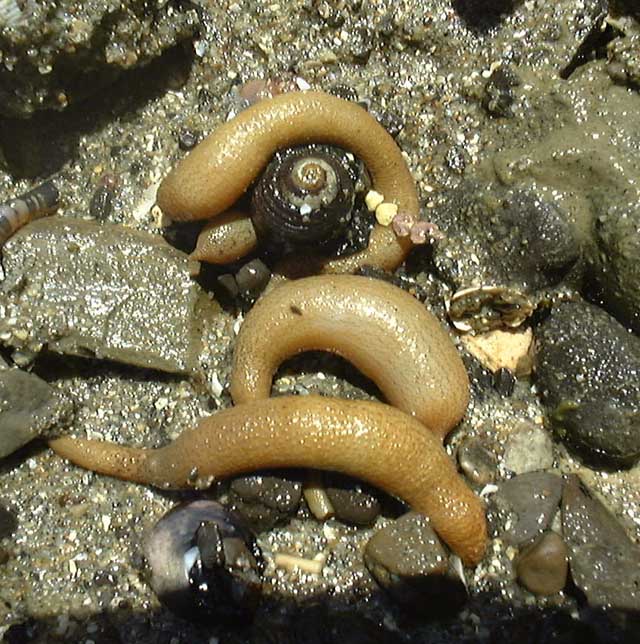
In his stories of travel adventures, I made the inevitable connection between trying food and trying things more generally. The quote, "try anything once" may have originally been made by him in reference to food, but it was a short leap to apply it to everything. "Try anything once" was the refrain running in my head as I ran out of a pool in Utah to roll in the snow, rode Supreme Scream, jumped off a sea cliff, ate a peanut worm whole, hopped a fence to go night swimming in my school's rec pool and consumed enough cyanide to flush my face and quicken my breathing. The principle cemented by that Szechuan pepper a decade earlier became the rallying cry for a broader life philosophy in my late teens. I still remember the look of betrayal my father gave me as I took a puff of his friend's offered Cuban cigar at age nineteen. Evidently, it hadn't occurred to him that "try anything once" might be taken farther than he had taken it.
This isn't to say that I had entirely missed the principles that counterbalanced my dad's experimentalism. I know perfectly well why he, unlike most of his family, didn't smoke, why he refused to join his school football team or was glad to avoid the Vietnam draft. The message that there was a difference between bravery and stupidity came through loud and clear. In college I didn't shy away from trying cigarettes, but I made certain that I would never become addicted to them. I won't ever touch heroin or meth, but it's not because my experimental drive doesn't implore me to try them, it's because they entail unacceptable risk.
Somewhere along the line, my "try anything once" philosophy was augmented by a corollary-- the fact that many tastes need to be acquired necessitates trying some things more than once. I think of this as the "Pixies principle" because it took me many times hearing the Pixies before I started to like them, but they ultimately became one of my favorite bands. It could just as easily be called the "Big Star principle", the "beer principle" or the "scary movie month principle". In all cases, demanding that something be immediately gratifying would have denied me great joy. Patience and an open mind eventually paid dividends.
This principle implies its own corollary, though. You can't appreciate many things unless you approach them with the right attitude, so this principle also necessitates an amount of self-policing. Do you genuinely want to like something? Do you possibly dislike something because you want to dislike it for outside reasons? I mean, how could any hipster honestly say that they don't like Nirvana? Every American our age has been sufficiently exposed to Nirvana, those with a taste for indie and alternative rock styles like the sound, and Nirvana is patently awesome. The best explanation for indie hipsters who claim they don't like Nirvana is that they don't like Nirvana because they don't want to like Nirvana. It's a terrible tragedy for somebody to not appreciate Nirvana, so we must fight this mind-over-matter selectivity in ourselves. Thus we have the "Nirvana principle".
Two of my best friends don't like things for transparently mental reasons. The first, a nonpracticing Jew, hates the smell and taste of pork. The second, an ex-Mormon, hates the smell and taste of coffee. These are intelligent, thoughtful people, but I have never met a single person who disliked pork free of religious or near-religious (aka vegetarian) motives. This is a depiction of the mind's potent effect on our perception of smell and flavor, akin to how a person can't stand the smell of a liquor they overindulged in the night before. When, the day after a night of lots of beer and puking, beer smelled like vomit, I said to myself, "don't be a bitch" and I finished the beer I'd opened in spite of my revulsion. By the next day I could enjoy beer again because I had refused to be slave to my own mind.
I've found that the best way to deal with the open-endedness of the Nirvana principle is to assume that deep down everyone's the same. Of course, we're not the same. To what extent is up for debate, but at the very least we know that some people have or lack specific taste receptor genes. Broccoli tastes qualitatively more heinous to some people than to other people. Some men are wired to be exclusively attracted to men instead of to women, etc. I think that's where our fundamental differences end. I think that, unlike taste receptors, our brains are complex enough that we have the capacity in us to enjoy just about anything. If somebody else can enjoy something, so can I. At the very least, common humanity is a worthy assumption.
But where do I draw the line? Am I obligated to like everything or to die trying to like everything? Well, no. It is a legitimate question, though, and one without a perfect answer. The way we should choose what to try to like lies in practicality. Because my musical enculturation was grounded in classic rock and classical music, it is easier for me to acquire a taste for, say, new wave than for reggae. Assuming that I will derive the same joy from new wave as reggae, it is simply practical to choose the easiest one to acquire. I am also more likely to find friends eager to talk about new wave music, which is again a purely practical consideration.
I'm not arguing that obstacles to appreciating things do not exist, but that such obstacles are quantitative rather than qualitative. That is, that the question isn't whether or not it is possible to overcome an obstacle, but rather how much effort and time are required to overcome something. What I disagree with is the defeatism of "this is just how I am" and "I can't change who I am". Tastes may define a person's persona, but they do not define one's personality. Personality is a far more slippery quality.
For both vanity and personal-compatibility reasons I prefer confident women unafraid to speak their minds. For natural reasons I prefer more attractive women, but nature does not specify what kind of beauty I should like. Most of my preferences for women's appearance, other than attractiveness, exist because they correlate with personal compatibility. I'm more likely to get along with a girl who typically wears little-or-no makeup than one who wears a lot. I'm more likely to enjoy the company of a girl who wears sensible, fashionable clothes than one who wears either tacky or markedly conservative garb. These sorts of judgements are ideally where my prejudice ends, however, because I have a vested interest in considering the maximum range of women for romance. I can be picky later. Sometimes the process of determining my taste involves thoughtful self-analysis. I can acquire a taste for a "type" of woman if I want to and I generally want to if I think it will increase my range of options without significantly decreasing the quality of my options in terms of likelihood for personal compatibility.
Once you realize how very much control you have over your own tastes, you can consciously broaden your tastes to suit your needs. The way to find out to what degree you can is to try. Try not just with your physical actions, but with your mind and soul. Have a little faith in me and a little faith in your common humanity. Remember, there is no specific taste receptor for pork.
It is to my abiding shame that I cannot like raw tomato, but I am proud of having shame for a shortcoming of taste. I suspect it's a result of some rogue taste receptor gene of mine, but I cannot be sure, and every year or so still, I try a bite of good, raw tomato. I haven't yet been able to enjoy it, but I lose nothing in trying it.
All of this is to say, don't be picky. Don't be a slave to your mind, because you can like whatever you set your mind to like (except maybe broccoli or tomato). As important as it is to know your own limitations, it is also important to search out and eliminate false limitations. Open yourself up to the world as much as you can stand and do your best to appreciate it in all its glory. You will be rewarded. This, I promise you.
And when you're eating at a restaurant with me and I ask for a bite of your meal, say yes. Please also ask for a taste of mine. We can discuss our food. It will make me happy.
Somewhere along the line I remember my mom intoning with an unmistakable air of pride that we weren't picky eaters compared to most of our friends. We ate seafood, most vegetables and a host of gourmet and ethnic food that our parents had been gradually introducing us to. Among the mythology of my childhood was a story about me as a toddler, picking apart sushi rolls. When my parents were distracted, my two-year-old-self snatched up a ball of wasabi and swallowed it entirely. My dad still loves to describe the look on my face and how, admirably, I didn't even cry.
Dad instilled in me an enthusiasm for spicy food. I originally approached it as a macho thing. I'd sneer at my sister for complaining about spiciness and load my gumbo with as much Tabasco as I could stand. I remember, in a Chinese restaurant, bravely trying one of those Szechuan peppers after seeing my dad toss a couple back. Sometimes Bri and I would dare each other to eat one. To this day I occasionally eat a Szechuan pepper, just for kicks. The sensation is always one of terrible burning, but you never know if your taste buds have changed. A behavioral psychologist would say that in my family the social dividends of brave experimentalism outweighed the danger of an unpleasant taste.
Once our parents divorced, Bri and I's cultivated non-pickiness became tangibly useful. Our bachelor Dad would take us to Costco for a food run. He'd tell us to "get kid food" and we'd come back with boxes of fruit loops, "granola bars" made mostly of corn syrup and puffed rice and veritable tubs of jelly bellies, gummi worms, etc. Dad would buy it unquestioningly. If dinners weren't consistently a family affair of meat and vegetables, we might have ended up inches shorter than we are today. When the "kid food" ran out, as it inevitably did, we resorted to experimenting with Dad's leftovers or tolerating his offered concoctions, even violating the breakfast-must-be-sweet principle universally understood by children across America as sacrosanct.
Thus it was that open-mindedness established itself as not only a source of pride for Bri and I, but as a necessity for survival. Experimentalism became a sort of religion for us, a direct product of our father's influence. Chicken feet, pig's ear, pigeon, escargot, beef tongue, raw oysters (<3!) and all forms of sushi were things we not only ate, but actively sought out to try. By the time I was in high school, our open-minded food tastes were integral to our self-identities and our family culture.
It was about that time that my dad organized a multi-week backpacking trip to Wyoming with his longtime friend Jack Kisslinger. For that trip, we treated him as family. In restaurants, when Bri or I requested a taste of Jack's meal, we had no expectation that he might refuse. We took it for granted that everyone was entitled to a bite of each other person's meal. Agreeable Jack gracefully adapted to this after a few nights of confusion. Bri and I would also angrily squabble amongst ourselves and, in the case of Jack or Dad, diplomatically implore about what dish the other person should order. You see, we wanted to maximize the number of dishes we got to taste of the restaurant's. If two people got the same dish, we would only have three unique entrees to try rather than four. So it was that Bri and I would identify the most intriguing dishes and often fight about who got to order the most-desirable of the remaining dishes after the adults' choices (in the most memorable example, this came between meat loaf and baby back ribs, so you can understand the passion). During those next few weeks, Jack's presence and semi-voluntary inclusion into our family culture elucidated our culture's uniqueness to Bri and I, which increased our family food culture importance in our identities.
My dad loved to regale us with his adventures traveling the world. He almost never turned down bizarre local delicacies, but he did tell of one restaurant in China that he turned down. He and his friend looked into the window and watched as a spider monkey was clamped by its head to a tray, the top of its skull was popped off with a knife and its quivering brains were eaten with spoons as the monkey screamed its head off (pardon the pun) and thrashed in evident agony, trying to escape. My dad told his friend, "let's eat somewhere else". Thus did I learn the limitations of my dad's considerable zeal for adventure.
In his stories of travel adventures, I made the inevitable connection between trying food and trying things more generally. The quote, "try anything once" may have originally been made by him in reference to food, but it was a short leap to apply it to everything. "Try anything once" was the refrain running in my head as I ran out of a pool in Utah to roll in the snow, rode Supreme Scream, jumped off a sea cliff, ate a peanut worm whole, hopped a fence to go night swimming in my school's rec pool and consumed enough cyanide to flush my face and quicken my breathing. The principle cemented by that Szechuan pepper a decade earlier became the rallying cry for a broader life philosophy in my late teens. I still remember the look of betrayal my father gave me as I took a puff of his friend's offered Cuban cigar at age nineteen. Evidently, it hadn't occurred to him that "try anything once" might be taken farther than he had taken it.
This isn't to say that I had entirely missed the principles that counterbalanced my dad's experimentalism. I know perfectly well why he, unlike most of his family, didn't smoke, why he refused to join his school football team or was glad to avoid the Vietnam draft. The message that there was a difference between bravery and stupidity came through loud and clear. In college I didn't shy away from trying cigarettes, but I made certain that I would never become addicted to them. I won't ever touch heroin or meth, but it's not because my experimental drive doesn't implore me to try them, it's because they entail unacceptable risk.
Somewhere along the line, my "try anything once" philosophy was augmented by a corollary-- the fact that many tastes need to be acquired necessitates trying some things more than once. I think of this as the "Pixies principle" because it took me many times hearing the Pixies before I started to like them, but they ultimately became one of my favorite bands. It could just as easily be called the "Big Star principle", the "beer principle" or the "scary movie month principle". In all cases, demanding that something be immediately gratifying would have denied me great joy. Patience and an open mind eventually paid dividends.
This principle implies its own corollary, though. You can't appreciate many things unless you approach them with the right attitude, so this principle also necessitates an amount of self-policing. Do you genuinely want to like something? Do you possibly dislike something because you want to dislike it for outside reasons? I mean, how could any hipster honestly say that they don't like Nirvana? Every American our age has been sufficiently exposed to Nirvana, those with a taste for indie and alternative rock styles like the sound, and Nirvana is patently awesome. The best explanation for indie hipsters who claim they don't like Nirvana is that they don't like Nirvana because they don't want to like Nirvana. It's a terrible tragedy for somebody to not appreciate Nirvana, so we must fight this mind-over-matter selectivity in ourselves. Thus we have the "Nirvana principle".
Two of my best friends don't like things for transparently mental reasons. The first, a nonpracticing Jew, hates the smell and taste of pork. The second, an ex-Mormon, hates the smell and taste of coffee. These are intelligent, thoughtful people, but I have never met a single person who disliked pork free of religious or near-religious (aka vegetarian) motives. This is a depiction of the mind's potent effect on our perception of smell and flavor, akin to how a person can't stand the smell of a liquor they overindulged in the night before. When, the day after a night of lots of beer and puking, beer smelled like vomit, I said to myself, "don't be a bitch" and I finished the beer I'd opened in spite of my revulsion. By the next day I could enjoy beer again because I had refused to be slave to my own mind.
I've found that the best way to deal with the open-endedness of the Nirvana principle is to assume that deep down everyone's the same. Of course, we're not the same. To what extent is up for debate, but at the very least we know that some people have or lack specific taste receptor genes. Broccoli tastes qualitatively more heinous to some people than to other people. Some men are wired to be exclusively attracted to men instead of to women, etc. I think that's where our fundamental differences end. I think that, unlike taste receptors, our brains are complex enough that we have the capacity in us to enjoy just about anything. If somebody else can enjoy something, so can I. At the very least, common humanity is a worthy assumption.
But where do I draw the line? Am I obligated to like everything or to die trying to like everything? Well, no. It is a legitimate question, though, and one without a perfect answer. The way we should choose what to try to like lies in practicality. Because my musical enculturation was grounded in classic rock and classical music, it is easier for me to acquire a taste for, say, new wave than for reggae. Assuming that I will derive the same joy from new wave as reggae, it is simply practical to choose the easiest one to acquire. I am also more likely to find friends eager to talk about new wave music, which is again a purely practical consideration.
I'm not arguing that obstacles to appreciating things do not exist, but that such obstacles are quantitative rather than qualitative. That is, that the question isn't whether or not it is possible to overcome an obstacle, but rather how much effort and time are required to overcome something. What I disagree with is the defeatism of "this is just how I am" and "I can't change who I am". Tastes may define a person's persona, but they do not define one's personality. Personality is a far more slippery quality.
For both vanity and personal-compatibility reasons I prefer confident women unafraid to speak their minds. For natural reasons I prefer more attractive women, but nature does not specify what kind of beauty I should like. Most of my preferences for women's appearance, other than attractiveness, exist because they correlate with personal compatibility. I'm more likely to get along with a girl who typically wears little-or-no makeup than one who wears a lot. I'm more likely to enjoy the company of a girl who wears sensible, fashionable clothes than one who wears either tacky or markedly conservative garb. These sorts of judgements are ideally where my prejudice ends, however, because I have a vested interest in considering the maximum range of women for romance. I can be picky later. Sometimes the process of determining my taste involves thoughtful self-analysis. I can acquire a taste for a "type" of woman if I want to and I generally want to if I think it will increase my range of options without significantly decreasing the quality of my options in terms of likelihood for personal compatibility.
Once you realize how very much control you have over your own tastes, you can consciously broaden your tastes to suit your needs. The way to find out to what degree you can is to try. Try not just with your physical actions, but with your mind and soul. Have a little faith in me and a little faith in your common humanity. Remember, there is no specific taste receptor for pork.
It is to my abiding shame that I cannot like raw tomato, but I am proud of having shame for a shortcoming of taste. I suspect it's a result of some rogue taste receptor gene of mine, but I cannot be sure, and every year or so still, I try a bite of good, raw tomato. I haven't yet been able to enjoy it, but I lose nothing in trying it.
All of this is to say, don't be picky. Don't be a slave to your mind, because you can like whatever you set your mind to like (except maybe broccoli or tomato). As important as it is to know your own limitations, it is also important to search out and eliminate false limitations. Open yourself up to the world as much as you can stand and do your best to appreciate it in all its glory. You will be rewarded. This, I promise you.
And when you're eating at a restaurant with me and I ask for a bite of your meal, say yes. Please also ask for a taste of mine. We can discuss our food. It will make me happy.
Monday, September 12, 2011
The Coca-Cola Fiend
Back in the 80's, Coca-Cola tried to change their formula to so-called "New Coke", the fallout of which is why, until the last couple of years, cans of coke were labeled "Coca-Cola Classic". The rather compelling story of "New Coke" can be found on Wikipedia (of all the unlikely places to find a compellingly-written story).
I have said previously on this blog that Coca-Cola is awesome and I am here to say it again. Coca-Cola is fucking awesome. I'd like to elaborate on that starting premise.
Coca-Cola, as declared by a paper airline napkin, is "zesty and refreshing on the first sip and full and rich on the last". It has an impenetrable depth of flavor that, far from being intimidating, tastes easy and approachable even as it dares you to bury yourself in it's complexity. It complements most food and liquor remarkably well (my favorite pairing being with Chinese food). It has mild medicinal effects. In short, Coke is everything I believe a beverage should be.
My fascination with Coca-Cola led me to discover that different countries have been permitted to tweak the original formula for local tastes. Despite Andy Warhol's rather inspiring quote, not all cokes are created equal. The Apple House tasting team had one of its more epic sessions comparing cokes from the US, Mexico ("Mexicoke"), France and Spain. I must be getting spoiled by all of the options available to me as a resident of a major US city, because I think there really should be a store/soda bar somewhere in San Francisco that sells Coca-Colas from every country that coke is bottled in.
I'd also love to be able to taste older formulations of Coca-Cola, particularly the very earliest incarnations that still contained modest quantities of cocaine. In fact, crazy as it may sound, I would like to see that oldest formula reintroduced. At low concentrations, there's no reason that such a soda would be particularly dangerous or addictive. Coca-leaf tea is still consumed all over the Andes without causing problems. It is treated like coffee is treated here-- as a mild stimulant to power people through the working day. Of course, I expect that this retro coke would have considerably more kick than the current formula.
Flavor-wise, coke holds up well against craft sodas, though there is a key difference in approach. Like a good second-day gumbo (gumbo is always better the second day), Coca-Cola's flavors are married such that the individual ingredients cannot be parsed out. This is ideal for easy drinking and culinary harmony, but it plays poorly with gourmets who've been taught to pick out flavor notes, as with wine. Excellent craft sodas like Virgil's Rootbeer and Red Bull's Cola make their concoctions' individual components as clear as possible in the tasting. To sip one of these sodas is to take a tour of the ingredients proudly labeled on the back of the container: nutmeg, cinnamon, anise, clove, cardamom, cassis oil, etc. While purported ingredients for Coca-Cola's famously secret recipes are similarly complex and exotic (neroli oil, anyone?), the difference is one of taste rather than of quality. Coca-Cola produces a more harmonious soda while the best craft soda makers sacrifice harmony for a more explicit complexity. With the notable exception of Coke's choice of sweetener, there are no culinary grounds to fault or marginalize the quality of Coke as a world-class soda. Anyone who has, as I have, made a point to compare every available cola must inevitably recognize the resounding excellence of Coca-Cola.
I have said previously on this blog that Coca-Cola is awesome and I am here to say it again. Coca-Cola is fucking awesome. I'd like to elaborate on that starting premise.
Coca-Cola, as declared by a paper airline napkin, is "zesty and refreshing on the first sip and full and rich on the last". It has an impenetrable depth of flavor that, far from being intimidating, tastes easy and approachable even as it dares you to bury yourself in it's complexity. It complements most food and liquor remarkably well (my favorite pairing being with Chinese food). It has mild medicinal effects. In short, Coke is everything I believe a beverage should be.
My fascination with Coca-Cola led me to discover that different countries have been permitted to tweak the original formula for local tastes. Despite Andy Warhol's rather inspiring quote, not all cokes are created equal. The Apple House tasting team had one of its more epic sessions comparing cokes from the US, Mexico ("Mexicoke"), France and Spain. I must be getting spoiled by all of the options available to me as a resident of a major US city, because I think there really should be a store/soda bar somewhere in San Francisco that sells Coca-Colas from every country that coke is bottled in.
I'd also love to be able to taste older formulations of Coca-Cola, particularly the very earliest incarnations that still contained modest quantities of cocaine. In fact, crazy as it may sound, I would like to see that oldest formula reintroduced. At low concentrations, there's no reason that such a soda would be particularly dangerous or addictive. Coca-leaf tea is still consumed all over the Andes without causing problems. It is treated like coffee is treated here-- as a mild stimulant to power people through the working day. Of course, I expect that this retro coke would have considerably more kick than the current formula.
Flavor-wise, coke holds up well against craft sodas, though there is a key difference in approach. Like a good second-day gumbo (gumbo is always better the second day), Coca-Cola's flavors are married such that the individual ingredients cannot be parsed out. This is ideal for easy drinking and culinary harmony, but it plays poorly with gourmets who've been taught to pick out flavor notes, as with wine. Excellent craft sodas like Virgil's Rootbeer and Red Bull's Cola make their concoctions' individual components as clear as possible in the tasting. To sip one of these sodas is to take a tour of the ingredients proudly labeled on the back of the container: nutmeg, cinnamon, anise, clove, cardamom, cassis oil, etc. While purported ingredients for Coca-Cola's famously secret recipes are similarly complex and exotic (neroli oil, anyone?), the difference is one of taste rather than of quality. Coca-Cola produces a more harmonious soda while the best craft soda makers sacrifice harmony for a more explicit complexity. With the notable exception of Coke's choice of sweetener, there are no culinary grounds to fault or marginalize the quality of Coke as a world-class soda. Anyone who has, as I have, made a point to compare every available cola must inevitably recognize the resounding excellence of Coca-Cola.
Thursday, August 18, 2011
Oh The Humanity: Regarding Foie Gras
I saw this banner on Facebook:
"Humane Foie Gras?
"Humane Foie Gras?

If you have purchased Foie Gras, believing it was humanely raised, we want to hear from you. Contact the Animal Legal Defense Fund."
I figured it merited a reply.
Dear Animal Legal Defense Fund,
I have bought Foie Gras with the knowledge that the poultry I am eating represents some of the most humanely raised meat available for purchase in the United States. I have seen the videos of geese eagerly lining up for their feeding and the idyllic living circumstances of high dollar French foie gras geese. These birds are not suffering. To assert that they are suffering amidst a backdrop of the breathtakingly inhumane treatment of the average American chicken is so absurd as to be motivationally suspect. Does any of your funding come from the poultry industry?
Sincerely,
Max
Dear Mr. Vidrine,
Thank you for your email. I appreciate your interest in animal welfare. I would be very interested in speaking with you further about this issue. Would you be available to speak by phone in the next week, and if so, when would be a good time?
Meanwhile, I will explain briefly Animal Legal Defense Fund’s position on foie gras:
While the video featuring Mr. Bourdain suggests that the conditions in force-fed foie gras farming are humane, it appears that it shows only the early stages of the force-feeding process. Our research has shown that ducks in the mid and late stages suffer serious health consequences as a result of the high-calorie, nutritionally deficient diet they are fed. Aside from the risk of injury to the esophagus from repeated insertion of the feeding tube, ducks develop lameness, bone and skin disorders, respiratory problems, and an inability to groom properly as a result of obesity. Some ducks, unable to walk, attempt to push themselves around their pens with their wings, causing themselves injury. In some cases the excess food leads to aspiration pneumonia. Many ducks develop painful foot infections due to the combination of their increased weight and the wire-mesh flooring of their pens. Finally, the accumulation of fat in the liver interferes with liver function. Many ducks slaughtered for foie gras would otherwise die of liver failure or other conditions brought on by the force-feeding. Based on this information, we do not believe that this production is humane.
You can find more information in an EU study of foie gras production and in a report by the Humane Society of the United States.
Although it is true that some ducks naturally gorge in preparation for migration, the amount of food that is force-fed to ducks in foie gras operations is well beyond what a duck would normally ingest, even while gorging.
Finally, I assure you that Animal Legal Defense Fund does not accept funding from any industry that exploits animals. We are fully in agreement with you that the treatment of chickens in factory farms is unacceptable and inhumane. Addressing those conditions is one of our aims as an organization. The attention we give to foie gras is in no way meant to express an endorsement of other forms of factory farming.
Sincerely,
Michelle Lee
Dear Ms. Lee
After perusing the literature you linked, it seems clear that foie gras production has been subject to considerable rationalization in the last 20-30 years and that it is no longer as uniformly idyllic as my father and Anthony Bourdain would present it.
That said, most of the health consequences you mentioned refer back to the ducks/geese being made extremely fat. I'm afraid I do not find the existence of such health problems troubling. This is because of two things, the first being that fatness is the point of force feeding and the second being that these animals only live in such an extremely fat state for a relatively short period of time before they go to slaughter.
Frankly, as a foodie, being indulged to the brink of death doesn't sound so bad. Furthermore, however rationalized most foie gras production now is, the fact remains that the poultry involved are substantially better off than mainline poultry on factory farms. Also important is the fact that foie gras ducks/geese represent a tiny, delicious minority of all poultry produced and consumed.
Now apart from the humane-ness or inhumane-ness, I dislike foie gras restriction as a political issue. It sits, along with curtailing deer hunting (deer are overpopulating throughout the US without natural predation from wolves), as one of the most misguided routes attempted in the name of animal rights. Don't get me wrong, I understand why it is brought up as an issue: it is both moralist and populist without actually affecting the welfare of poultry in any significant way. It makes activists feel like they are accomplishing something without incurring the wrath of business-conscious conservatives. Imported luxury goods are always an easy political target to raise a rabble with.
Unfortunately, this does nothing to address the very real problem of inhumane living conditions for chickens and other factory-farmed poultry. It wastes political capital on eliminating one of the handful of reasonably ethical segments of the poultry industry. It discourages people like me who eat meat, but would like to see meat not produced in a living poultry hell. It is a slap in the face to gourmets (who, generally speaking, do care about how their food is treated). It discredits animal rights as a movement by giving emphasis to its bleeding heart, little picture, meat-is-murder contingent.
I'm glad your organization receives no money from the poultry industry, but I hope you understand my distaste for foie gras as an animal rights issue. Thank you for bringing me to a better understanding of how foie gras is actually produced.
Regards,
Max Vidrine
Between you and me, I lied about having bought foie gras. I've only eaten it, but now I'm super hungry for some. If only I weren't so poor...
I figured it merited a reply.
Dear Animal Legal Defense Fund,
I have bought Foie Gras with the knowledge that the poultry I am eating represents some of the most humanely raised meat available for purchase in the United States. I have seen the videos of geese eagerly lining up for their feeding and the idyllic living circumstances of high dollar French foie gras geese. These birds are not suffering. To assert that they are suffering amidst a backdrop of the breathtakingly inhumane treatment of the average American chicken is so absurd as to be motivationally suspect. Does any of your funding come from the poultry industry?
Sincerely,
Max
Dear Mr. Vidrine,
Thank you for your email. I appreciate your interest in animal welfare. I would be very interested in speaking with you further about this issue. Would you be available to speak by phone in the next week, and if so, when would be a good time?
Meanwhile, I will explain briefly Animal Legal Defense Fund’s position on foie gras:
While the video featuring Mr. Bourdain suggests that the conditions in force-fed foie gras farming are humane, it appears that it shows only the early stages of the force-feeding process. Our research has shown that ducks in the mid and late stages suffer serious health consequences as a result of the high-calorie, nutritionally deficient diet they are fed. Aside from the risk of injury to the esophagus from repeated insertion of the feeding tube, ducks develop lameness, bone and skin disorders, respiratory problems, and an inability to groom properly as a result of obesity. Some ducks, unable to walk, attempt to push themselves around their pens with their wings, causing themselves injury. In some cases the excess food leads to aspiration pneumonia. Many ducks develop painful foot infections due to the combination of their increased weight and the wire-mesh flooring of their pens. Finally, the accumulation of fat in the liver interferes with liver function. Many ducks slaughtered for foie gras would otherwise die of liver failure or other conditions brought on by the force-feeding. Based on this information, we do not believe that this production is humane.
You can find more information in an EU study of foie gras production and in a report by the Humane Society of the United States.
Although it is true that some ducks naturally gorge in preparation for migration, the amount of food that is force-fed to ducks in foie gras operations is well beyond what a duck would normally ingest, even while gorging.
Finally, I assure you that Animal Legal Defense Fund does not accept funding from any industry that exploits animals. We are fully in agreement with you that the treatment of chickens in factory farms is unacceptable and inhumane. Addressing those conditions is one of our aims as an organization. The attention we give to foie gras is in no way meant to express an endorsement of other forms of factory farming.
Sincerely,
Michelle Lee
Dear Ms. Lee
After perusing the literature you linked, it seems clear that foie gras production has been subject to considerable rationalization in the last 20-30 years and that it is no longer as uniformly idyllic as my father and Anthony Bourdain would present it.
That said, most of the health consequences you mentioned refer back to the ducks/geese being made extremely fat. I'm afraid I do not find the existence of such health problems troubling. This is because of two things, the first being that fatness is the point of force feeding and the second being that these animals only live in such an extremely fat state for a relatively short period of time before they go to slaughter.
Frankly, as a foodie, being indulged to the brink of death doesn't sound so bad. Furthermore, however rationalized most foie gras production now is, the fact remains that the poultry involved are substantially better off than mainline poultry on factory farms. Also important is the fact that foie gras ducks/geese represent a tiny, delicious minority of all poultry produced and consumed.
Now apart from the humane-ness or inhumane-ness, I dislike foie gras restriction as a political issue. It sits, along with curtailing deer hunting (deer are overpopulating throughout the US without natural predation from wolves), as one of the most misguided routes attempted in the name of animal rights. Don't get me wrong, I understand why it is brought up as an issue: it is both moralist and populist without actually affecting the welfare of poultry in any significant way. It makes activists feel like they are accomplishing something without incurring the wrath of business-conscious conservatives. Imported luxury goods are always an easy political target to raise a rabble with.
Unfortunately, this does nothing to address the very real problem of inhumane living conditions for chickens and other factory-farmed poultry. It wastes political capital on eliminating one of the handful of reasonably ethical segments of the poultry industry. It discourages people like me who eat meat, but would like to see meat not produced in a living poultry hell. It is a slap in the face to gourmets (who, generally speaking, do care about how their food is treated). It discredits animal rights as a movement by giving emphasis to its bleeding heart, little picture, meat-is-murder contingent.
I'm glad your organization receives no money from the poultry industry, but I hope you understand my distaste for foie gras as an animal rights issue. Thank you for bringing me to a better understanding of how foie gras is actually produced.
Regards,
Max Vidrine
Between you and me, I lied about having bought foie gras. I've only eaten it, but now I'm super hungry for some. If only I weren't so poor...
Friday, April 1, 2011
Pitchfork and Allmusic
It all started with Sufjan Stevens.
Sufjan Stevens was at the height of popularity when I was finishing high school, having just released the second album in his fifty states project. All of my hippest friends had him in heavy rotation on their iPods, right up there with Radiohead. The next year, in the dorms, I used iTunes's network to view and listen to the libraries of fellow students. It became apparent that Sufjan was among a group of bands whose popularity could be traced back to heavy promotion by Pitchfork Media. It also became apparent to me that Sufjan Stevens was a sort of fraud.
His music was all surface and no substance. That was notable enough, but my real epiphany was the realization that his music's surface catered to the sensibilities of critics and aspiring pretentious white kids everywhere. The elaborate arrangements, unusual instrumentation and hyper-empathetic vocals broke through bored critics palates and bypassed well-rehearsed cynicism. This would be all well and good if most music critics emphasized songwriting/musicianship over the progression of music's sound. Sometime before they actually wrote a review that sounded like a fourteen-year-old having a wet dream, they would have realized that the songs just weren't that great. It wasn't that Sufjan Stevens was bad, he just wasn't the musical genius he got billed as.
In the last couple of years Sufjan has admitted that the fifty states project was a publicity stunt that he never actually intended to carry out. At the end of last year he released his densest, most use-weird-noises-to-cover-a-lack-of-underlying-talent album ever, to an excellent reception by Pitchfork.
Hype is a pretty natural tendency of art criticism, especially when the critics in question are relatively young (when I was finishing high school the mean age of Pitchfork staffers was in the mid-20's). Some amount of self-policing must exist for an organization to produce a thoughtful body of criticism worthy of respect. The "Pitchfork band" phenomena indicated that shiny new, rapidly rising Pitchfork Media was (and continues to be) the most prominent, most irresponsible perpetrator of music over-hype in the industry.
Sometime during my freshman year, I started reading AllMusic. They gave the Queens of the Stone Age respectful reviews, said nice things about Sufjan without implying that he had any real talent, and panned Radiohead's alleged masterpiece Kid A. That last bit caught my attention and it earned my respect, even though I disagreed with their review right up until they backtracked and conceded to the album's greatness last year. In short, AllMusic embodied the contrary, thoughtful kind of snobbery that I saw in myself.
With the aid of dorm broadband, I was downloading music about as fast as I could keep up with. AllMusic provided comprehensive artist bios, discographies and a wealth of internal hyperlinking (genres, similar bands, bands influenced, etc). It's design was ideal for me to rapidly sift through music and investigate and expand my tastes into unknown territory.
It soon became apparent that I faced a dilemma. If I continued to blindly trust AllMusic's reviewers, my tastes would quickly become beholden to and bounded by the tastes and knowledge of a small group of individuals. I had to decide whether or not to sell my soul to AllMusic.
I mulled the decision over for a couple of weeks, but in the end it was an easy choice. I was fresh off my discovery of Sgt. Pepper's Lonely Heart's Club Band. I was eager to develop a taste for the "classic" bands and albums of rock and roll. I never put much stock in individualism and indeed, I'm irritated by the definition and cultivation of "personal taste". Personal taste should be treated as bias that must be filtered out of any final, "true" assessment. There is such a thing as great art in absolute terms.
I sold my soul to AllMusic. And I never looked back.
Sufjan Stevens was at the height of popularity when I was finishing high school, having just released the second album in his fifty states project. All of my hippest friends had him in heavy rotation on their iPods, right up there with Radiohead. The next year, in the dorms, I used iTunes's network to view and listen to the libraries of fellow students. It became apparent that Sufjan was among a group of bands whose popularity could be traced back to heavy promotion by Pitchfork Media. It also became apparent to me that Sufjan Stevens was a sort of fraud.
His music was all surface and no substance. That was notable enough, but my real epiphany was the realization that his music's surface catered to the sensibilities of critics and aspiring pretentious white kids everywhere. The elaborate arrangements, unusual instrumentation and hyper-empathetic vocals broke through bored critics palates and bypassed well-rehearsed cynicism. This would be all well and good if most music critics emphasized songwriting/musicianship over the progression of music's sound. Sometime before they actually wrote a review that sounded like a fourteen-year-old having a wet dream, they would have realized that the songs just weren't that great. It wasn't that Sufjan Stevens was bad, he just wasn't the musical genius he got billed as.
In the last couple of years Sufjan has admitted that the fifty states project was a publicity stunt that he never actually intended to carry out. At the end of last year he released his densest, most use-weird-noises-to-cover-a-lack-of-underlying-talent album ever, to an excellent reception by Pitchfork.
Hype is a pretty natural tendency of art criticism, especially when the critics in question are relatively young (when I was finishing high school the mean age of Pitchfork staffers was in the mid-20's). Some amount of self-policing must exist for an organization to produce a thoughtful body of criticism worthy of respect. The "Pitchfork band" phenomena indicated that shiny new, rapidly rising Pitchfork Media was (and continues to be) the most prominent, most irresponsible perpetrator of music over-hype in the industry.
Sometime during my freshman year, I started reading AllMusic. They gave the Queens of the Stone Age respectful reviews, said nice things about Sufjan without implying that he had any real talent, and panned Radiohead's alleged masterpiece Kid A. That last bit caught my attention and it earned my respect, even though I disagreed with their review right up until they backtracked and conceded to the album's greatness last year. In short, AllMusic embodied the contrary, thoughtful kind of snobbery that I saw in myself.
With the aid of dorm broadband, I was downloading music about as fast as I could keep up with. AllMusic provided comprehensive artist bios, discographies and a wealth of internal hyperlinking (genres, similar bands, bands influenced, etc). It's design was ideal for me to rapidly sift through music and investigate and expand my tastes into unknown territory.
It soon became apparent that I faced a dilemma. If I continued to blindly trust AllMusic's reviewers, my tastes would quickly become beholden to and bounded by the tastes and knowledge of a small group of individuals. I had to decide whether or not to sell my soul to AllMusic.
I mulled the decision over for a couple of weeks, but in the end it was an easy choice. I was fresh off my discovery of Sgt. Pepper's Lonely Heart's Club Band. I was eager to develop a taste for the "classic" bands and albums of rock and roll. I never put much stock in individualism and indeed, I'm irritated by the definition and cultivation of "personal taste". Personal taste should be treated as bias that must be filtered out of any final, "true" assessment. There is such a thing as great art in absolute terms.
I sold my soul to AllMusic. And I never looked back.
Friday, March 25, 2011
On Militant Atheism
The following was compiled from a debate with Rob about a post of his titled Schmutz about ridiculing a passerby for having ash on his head on Ash Wednesday. For the purposes of this post, please read "religion" as "Christianity". Also, and this should go without saying on my blog anyways, if you have hate for this post, please don't remain silent. Address me directly and thoughtfully, either by comment or email.
For what it's worth, Rob, I don't consider you militant anything either. You say that in defending religion I am "defending the indefensible"? Lines like that ensure a long return letter from me.
So you say it was your laughter after being angry, bigoted and confrontational that made it ok? I guess it depends on the kind of laughter. I laugh a hard, cruel laugh when I've made a particularly witty joke at someone's (or an implied group's) expense. That was the laughter (maybe muted, but the spirit anyways) I envisioned in your post. It is a laughter at one's own horribleness, but it's also a sort of victory lap, a twisted embrace of all that is unholy about wit and being born to, frankly, a superior mind. It has its place in my life and I expect it has its place in yours. I'm just saying that if that kind of laughter has made its way to strangers simply for having ash on their foreheads, you've gotten a little far afield.
Life is not nearly so simple, and I'm not talking about the minority of nonbelievers who will wear ash each year. I'm talking about the bivalent nature of something as enmeshed into human life and culture as religion. It can be very bad for people, but if you miss its capacity to genuinely be very good for people or indeed miss the extent to which it genuinely helps most people within its clutches, you are missing something very important.
Living in Davis taught every person of notable intellect how boring militant atheism can be and frankly, how crass it is. I've lived the dream of a majority atheist/agnostic society and I can tell you for certain that it is a place of rationalized persecution, bigotry and, this is especially important, a notable lack of philosophical thought. Can you believe we have an atheist/agnostic club in such a place? What the hell do you think they discuss at their meetings? Seriously, all I can think of is getting out "the word" and why non-non-believers suck. They certainly don't have much to discuss in terms of personal philosophy. I can't imagine a UCD organization less likely to include an individual of insight and imagination.
I came to the conclusion a long time ago that I was just as helpless in not believing in god as so many people are helpless in believing in him. To think otherwise is to give oneself too much credit. There is no minority of people who came to religion by choice. There is a minority of people whose environmental inputs were balanced enough that their decision was decided by native personality rather than those environmental inputs. People are simply not that freethinking. I'm not a determinist, I just recognize genuine free choice for being the intensely rare thing that it is.
I know a handful of enormously intelligent believers. That's not enough, by itself, to give me pause before deriding poster boys for a largely retarded sort of follow-the-leader mentality. It was hearing intelligent people talk about the significance of religion to them that explained to me why religion has existed as something enduring and powerful with deep relevance to the human condition rather than as some transient fad. That, is enough to give me pause before deriding even people who are obviously floatsam upon the tides of religious alignment. It's even enough to give me pause before deriding a person who so clearly is being negatively affected by their floatsamesque religious affiliation, because I cannot easily estimate the positives that religion contributes to their life.
The "is religion more good or bad?" topic is an especially poignant one for me, because my very favorite "intelligent believer" has been affected both so positively and so negatively by her religion. I've tried to imagine what kind of person she would be without her religion and I find it just too inextricably tied. The knee-jerk agnostic reaction would be a revulsion that somebody could be so consumed by a human institution, particularly under the false notion that the institution was superhuman in origin, but being affected by religion is no different from being affected by anything else and there is nothing inherently wrong with being affected so deeply by human institutions. Individuality is, after all, just another value of human construction.
Back to my point, though. My friend is affected in incredibly positive ways by her faith and in dangerous and potentially limiting ways. She lives a life with both more pain and more joy than I think she would live without religion. As to whether religion made her already-intense personality "gel" into the amazing person she is or whether it has straitjacketed her true potential or paved a road for her eventual self-destruction, I cannot say. Surely there is an example somewhere for every case. For now, I have decided it is best that I take it on faith that it does more good than bad. Whether or not that is true, though, I think her life is unquestionably the richer for having religion.
My highest hope for the world is not that people live happy lives free of the worst kinds of sorrow. My highest hope is that people live rich lives, full of both enormous happiness and enormous sorrow. My hope is that somewhere in the process that experience imparts to them tremendous insight into human nature. If religion makes the world a more painful place on the balance, that is still worth the richness and wisdom it brings to the world. Peace and happiness always sounded terribly boring, anyways. I concede that my belief as to what the balance comes to can be reduced to simple faith in my own educated guess. I also believe that if you had any kind of appreciation for its good, you'd see it "being more good than bad" for the very likely possibility that I see it. You say the hurt unleashed on the world by religion is unfathomable? The good unleashed is certainly also unfathomable. To think otherwise is hubris. Who are you to call the balance in religion's disfavor?
Militant atheists often write-off religion's appeal as grounded in fear of "meaninglessness and death". Let me open by saying people respond poorly and inconsistently to ultimatums ("Go to church or burn in hell! Donate a dollar to Red Cross or burn in hell! Wash your hands or go to hell!"). In practice, it only gets you so far in coercing action and loyalty. Cults are just religions without the staying power. Religion survives because there is wisdom inlaid in the tradition, rules and ceremony with genuine human relevance that resonates with people and their children.
To be sure, there is also the appeal of escaping "meaningless and death", but from my vantage point that appeal is rooted much deeper than such a predictable write-off would suggest. Religion is a beautiful and sophisticated allegory for dealing with death and meaninglessness. Just like old school fairy tales deal with childhood fears and traumas by conveying understanding and acceptance through allegory (ie. Little Red Riding hood is about sexual predation), so too does religion, albeit on a more sophisticated and encompassing scale. Religion, understood in my terms, does not deal with fear of death and meaningless through providing escapism, but by teaching understanding and acceptance through allegory. It is the best kind of coping mechanism.
This, perhaps, is the core of my belief system regarding religion. Religion is allegory that never breaks the fourth wall. Treated as such, it is not strident, it is not threatening, it just pushes gently and inexorably onto your skull, whispering how to live a good life, how to prepare for death, how to deal with problems both large and small. I've been working with this belief system for most of my adult life and I have yet to iron out all the wrinkles, but the beauty and reasonableness with which Christianity has opened up to me since then has assured me that I am onto something real and powerful.
Hopefully this clears up at least some of the enigma of my love for and defense of a religion I don't believe. I'm not an enigmatic person. I sometimes wish I was, which is why my first reaction to being called enigmatic is flattery. My second reaction, learned with time, is a recognition that any perception of enigma is simply a failure of mine to convey myself. I don't really want to be enigmatic anyways.
At the end of the day, these are arguments of belief and experience. There is a hard wall between us which you and I may or may not be able to bridge. Barring the success of such an appeal, I have this: Indulging in militant atheism and then posting it on your blog is cliche and contributes nothing to public discourse. Maybe in New Jersey militant atheism seems like an important voice that needs to be heard, but I assure you that your message is out there. Repeating it will only accentuate the misunderstanding and blind hostility on both sides.
Your post will provide no emotional comfort for militant atheists emotionally traumatized by the thought that their position is crazy. I've never met a militant atheist who thought their position was remotely crazy. Every one has been unwaveringly convinced that their position is the most sane position possible. Militant atheists need no comforting. What they need is a dose of reality. The crazier they think of themselves, the better. Their position is not valid. It is understandable, but it is not valid. Crazy is a label societies have traditionally utilized to cope with unconscionably destructive behavior. Militant atheism is destructive. It is hypocritical. It foments everything it seeks to combat. Its existence does no good for anybody, let alone people as a whole. What you are doing is at best, slightly bad for the world and at worst, extremely ugly. In either case it is not constructive in any artistic, philosophical or political sense I can think of. That post of yours is poison and it, my dear friend, is indefensible.
A friend of mine (a nonbeliever), after reading your post and my defending of your character, said, "well, still, you can be the nicest person and then turn around and say you hate niggers". I mean, unless that was the point, unless this was all an exercise in how slippery a slope hateful militant atheism is from a place of thoughtful agnosticism?
For what it's worth, Rob, I don't consider you militant anything either. You say that in defending religion I am "defending the indefensible"? Lines like that ensure a long return letter from me.
So you say it was your laughter after being angry, bigoted and confrontational that made it ok? I guess it depends on the kind of laughter. I laugh a hard, cruel laugh when I've made a particularly witty joke at someone's (or an implied group's) expense. That was the laughter (maybe muted, but the spirit anyways) I envisioned in your post. It is a laughter at one's own horribleness, but it's also a sort of victory lap, a twisted embrace of all that is unholy about wit and being born to, frankly, a superior mind. It has its place in my life and I expect it has its place in yours. I'm just saying that if that kind of laughter has made its way to strangers simply for having ash on their foreheads, you've gotten a little far afield.
Life is not nearly so simple, and I'm not talking about the minority of nonbelievers who will wear ash each year. I'm talking about the bivalent nature of something as enmeshed into human life and culture as religion. It can be very bad for people, but if you miss its capacity to genuinely be very good for people or indeed miss the extent to which it genuinely helps most people within its clutches, you are missing something very important.
Living in Davis taught every person of notable intellect how boring militant atheism can be and frankly, how crass it is. I've lived the dream of a majority atheist/agnostic society and I can tell you for certain that it is a place of rationalized persecution, bigotry and, this is especially important, a notable lack of philosophical thought. Can you believe we have an atheist/agnostic club in such a place? What the hell do you think they discuss at their meetings? Seriously, all I can think of is getting out "the word" and why non-non-believers suck. They certainly don't have much to discuss in terms of personal philosophy. I can't imagine a UCD organization less likely to include an individual of insight and imagination.
I came to the conclusion a long time ago that I was just as helpless in not believing in god as so many people are helpless in believing in him. To think otherwise is to give oneself too much credit. There is no minority of people who came to religion by choice. There is a minority of people whose environmental inputs were balanced enough that their decision was decided by native personality rather than those environmental inputs. People are simply not that freethinking. I'm not a determinist, I just recognize genuine free choice for being the intensely rare thing that it is.
I know a handful of enormously intelligent believers. That's not enough, by itself, to give me pause before deriding poster boys for a largely retarded sort of follow-the-leader mentality. It was hearing intelligent people talk about the significance of religion to them that explained to me why religion has existed as something enduring and powerful with deep relevance to the human condition rather than as some transient fad. That, is enough to give me pause before deriding even people who are obviously floatsam upon the tides of religious alignment. It's even enough to give me pause before deriding a person who so clearly is being negatively affected by their floatsamesque religious affiliation, because I cannot easily estimate the positives that religion contributes to their life.
The "is religion more good or bad?" topic is an especially poignant one for me, because my very favorite "intelligent believer" has been affected both so positively and so negatively by her religion. I've tried to imagine what kind of person she would be without her religion and I find it just too inextricably tied. The knee-jerk agnostic reaction would be a revulsion that somebody could be so consumed by a human institution, particularly under the false notion that the institution was superhuman in origin, but being affected by religion is no different from being affected by anything else and there is nothing inherently wrong with being affected so deeply by human institutions. Individuality is, after all, just another value of human construction.
Back to my point, though. My friend is affected in incredibly positive ways by her faith and in dangerous and potentially limiting ways. She lives a life with both more pain and more joy than I think she would live without religion. As to whether religion made her already-intense personality "gel" into the amazing person she is or whether it has straitjacketed her true potential or paved a road for her eventual self-destruction, I cannot say. Surely there is an example somewhere for every case. For now, I have decided it is best that I take it on faith that it does more good than bad. Whether or not that is true, though, I think her life is unquestionably the richer for having religion.
My highest hope for the world is not that people live happy lives free of the worst kinds of sorrow. My highest hope is that people live rich lives, full of both enormous happiness and enormous sorrow. My hope is that somewhere in the process that experience imparts to them tremendous insight into human nature. If religion makes the world a more painful place on the balance, that is still worth the richness and wisdom it brings to the world. Peace and happiness always sounded terribly boring, anyways. I concede that my belief as to what the balance comes to can be reduced to simple faith in my own educated guess. I also believe that if you had any kind of appreciation for its good, you'd see it "being more good than bad" for the very likely possibility that I see it. You say the hurt unleashed on the world by religion is unfathomable? The good unleashed is certainly also unfathomable. To think otherwise is hubris. Who are you to call the balance in religion's disfavor?
Militant atheists often write-off religion's appeal as grounded in fear of "meaninglessness and death". Let me open by saying people respond poorly and inconsistently to ultimatums ("Go to church or burn in hell! Donate a dollar to Red Cross or burn in hell! Wash your hands or go to hell!"). In practice, it only gets you so far in coercing action and loyalty. Cults are just religions without the staying power. Religion survives because there is wisdom inlaid in the tradition, rules and ceremony with genuine human relevance that resonates with people and their children.
To be sure, there is also the appeal of escaping "meaningless and death", but from my vantage point that appeal is rooted much deeper than such a predictable write-off would suggest. Religion is a beautiful and sophisticated allegory for dealing with death and meaninglessness. Just like old school fairy tales deal with childhood fears and traumas by conveying understanding and acceptance through allegory (ie. Little Red Riding hood is about sexual predation), so too does religion, albeit on a more sophisticated and encompassing scale. Religion, understood in my terms, does not deal with fear of death and meaningless through providing escapism, but by teaching understanding and acceptance through allegory. It is the best kind of coping mechanism.
This, perhaps, is the core of my belief system regarding religion. Religion is allegory that never breaks the fourth wall. Treated as such, it is not strident, it is not threatening, it just pushes gently and inexorably onto your skull, whispering how to live a good life, how to prepare for death, how to deal with problems both large and small. I've been working with this belief system for most of my adult life and I have yet to iron out all the wrinkles, but the beauty and reasonableness with which Christianity has opened up to me since then has assured me that I am onto something real and powerful.
Hopefully this clears up at least some of the enigma of my love for and defense of a religion I don't believe. I'm not an enigmatic person. I sometimes wish I was, which is why my first reaction to being called enigmatic is flattery. My second reaction, learned with time, is a recognition that any perception of enigma is simply a failure of mine to convey myself. I don't really want to be enigmatic anyways.
At the end of the day, these are arguments of belief and experience. There is a hard wall between us which you and I may or may not be able to bridge. Barring the success of such an appeal, I have this: Indulging in militant atheism and then posting it on your blog is cliche and contributes nothing to public discourse. Maybe in New Jersey militant atheism seems like an important voice that needs to be heard, but I assure you that your message is out there. Repeating it will only accentuate the misunderstanding and blind hostility on both sides.
Your post will provide no emotional comfort for militant atheists emotionally traumatized by the thought that their position is crazy. I've never met a militant atheist who thought their position was remotely crazy. Every one has been unwaveringly convinced that their position is the most sane position possible. Militant atheists need no comforting. What they need is a dose of reality. The crazier they think of themselves, the better. Their position is not valid. It is understandable, but it is not valid. Crazy is a label societies have traditionally utilized to cope with unconscionably destructive behavior. Militant atheism is destructive. It is hypocritical. It foments everything it seeks to combat. Its existence does no good for anybody, let alone people as a whole. What you are doing is at best, slightly bad for the world and at worst, extremely ugly. In either case it is not constructive in any artistic, philosophical or political sense I can think of. That post of yours is poison and it, my dear friend, is indefensible.
A friend of mine (a nonbeliever), after reading your post and my defending of your character, said, "well, still, you can be the nicest person and then turn around and say you hate niggers". I mean, unless that was the point, unless this was all an exercise in how slippery a slope hateful militant atheism is from a place of thoughtful agnosticism?
Monday, November 29, 2010
Bri's Board and My Theory of Loss
I took Bri's board surfing with Caius and a friend while visiting home for Thanksgiving. There wasn't a very good break at the beach we went to, but the waves were medium-sized and surprisingly strong. I snapped Bri's longboard in half. I didn't do anything special, just got knocked off the board and dragged under by the leash. Another wave followed and snapped the board while I was underwater. That was it.
I really loved that board, which brings me to my theory on the nature of grief and loss. I believe that the emotional fallout of loss, which is to say grieving, is the process of disentangling the lost thing from your vision of the future. I didn't realize it until now, but I really wanted to hang ten off that board.
Bri wasn't overly bummed about losing her board. She had always magnanimously taken my board when the two of us surfed. Our surf guru, my mom's exboyfriend Bob, however, adored it. The board was a full length longboard, broad winged and thin with an extra-light shell. This made it particularly fragile and a rather elegant ride. The board was quite sensitive for its length and could turn as fast as my much shorter board. The broad nose always beckoned me to try and get my toes on it, but it also caught the breeze like a sail, which was especially inconvenient because of the ease with which the board turned.
After the board broke, I gathered up the two pieces and took them home. Caius asked if we could repair it, but breaking in half is universally understood as a surf board's death sentence. Once the wood stringer's integrity is ruined, there's no way to make the board whole again. Bob wanted to make sure we'd kept the pieces, though, because he had a friend who could make a replica based on them. Bob estimated it would cost four hundred to make (the price moderately-used longboards go for in retail surfshops). Knowing Bob and his trouble with alcoholism and, even when sober, with finances, Mom predicted that he'd never get the money together for the board.
That not-quite-loss makes the whole experience more agonizing. The possibility of riding a board like that again makes it that much harder to let go. But let go we must. No good will come from wistfully looking forward to a day that will not come. Unfortunately, Bob left that cursed glimmer of hope and I'll likely have trouble shaking the image of one day riding a board like that. Instead of dealing that loss decisively, that hope will linger and gnaw on dark cold nights. Sometimes I wish that board's reincarnation was impossible.
We also must remind ourselves that, excepting the people we had at birth, loss necessarily must follow gain, and for all that we've had, our lives have been richer for it and we are still the better for it. I'm a much better surfer than I was before I started riding Bri's board.
We should also remind ourselves of all that we still have. Though I transferred technical ownership of my board to Bri, I'll still be able to ride it whenever I get a chance. I've always really liked my board. It doesn't paddle quite as fast or have a broad, inviting nose, but it's a more durable and versatile board. I think every surfboard has something to teach the rider, so my surfing may ultimately benefit when I eventually buy a new board to replace the one I ceded to Bri. Of course, I'll have to return to living on the coast for that to happen.
I really loved that board, which brings me to my theory on the nature of grief and loss. I believe that the emotional fallout of loss, which is to say grieving, is the process of disentangling the lost thing from your vision of the future. I didn't realize it until now, but I really wanted to hang ten off that board.
Bri wasn't overly bummed about losing her board. She had always magnanimously taken my board when the two of us surfed. Our surf guru, my mom's exboyfriend Bob, however, adored it. The board was a full length longboard, broad winged and thin with an extra-light shell. This made it particularly fragile and a rather elegant ride. The board was quite sensitive for its length and could turn as fast as my much shorter board. The broad nose always beckoned me to try and get my toes on it, but it also caught the breeze like a sail, which was especially inconvenient because of the ease with which the board turned.
After the board broke, I gathered up the two pieces and took them home. Caius asked if we could repair it, but breaking in half is universally understood as a surf board's death sentence. Once the wood stringer's integrity is ruined, there's no way to make the board whole again. Bob wanted to make sure we'd kept the pieces, though, because he had a friend who could make a replica based on them. Bob estimated it would cost four hundred to make (the price moderately-used longboards go for in retail surfshops). Knowing Bob and his trouble with alcoholism and, even when sober, with finances, Mom predicted that he'd never get the money together for the board.
That not-quite-loss makes the whole experience more agonizing. The possibility of riding a board like that again makes it that much harder to let go. But let go we must. No good will come from wistfully looking forward to a day that will not come. Unfortunately, Bob left that cursed glimmer of hope and I'll likely have trouble shaking the image of one day riding a board like that. Instead of dealing that loss decisively, that hope will linger and gnaw on dark cold nights. Sometimes I wish that board's reincarnation was impossible.
We also must remind ourselves that, excepting the people we had at birth, loss necessarily must follow gain, and for all that we've had, our lives have been richer for it and we are still the better for it. I'm a much better surfer than I was before I started riding Bri's board.
We should also remind ourselves of all that we still have. Though I transferred technical ownership of my board to Bri, I'll still be able to ride it whenever I get a chance. I've always really liked my board. It doesn't paddle quite as fast or have a broad, inviting nose, but it's a more durable and versatile board. I think every surfboard has something to teach the rider, so my surfing may ultimately benefit when I eventually buy a new board to replace the one I ceded to Bri. Of course, I'll have to return to living on the coast for that to happen.
Sunday, October 24, 2010
Legalizing Pot
I thought this day would never come. Well, I at least thought it would take another ten or twenty years before a measure to legalize recreational marijuana would be seriously considered by an American constituency. I was wrong. California's Proposition 19, that will legalize recreational pot use, is just barely behind in the polls.
This is spectacularly cool for a number of reasons, the foremost being the realization of a truer liberty in America. I've long thought that our founding fathers must be rolling in their graves to know that an essentially harmless drug like marijuana would be made formally illegal. If Ben Franklin were alive today I'm sure he'd be a fan of pot.
I will grant that marijuana is not entirely harmless. Like caffeine, THC can stunt childrens' growth, like alcohol it lowers inhibitions and though there is no indication that extensive abuse causes brain damage the way alcohol does, residual THC (aka permastone) can dampen brain function for a month or two, though only noticeably so if epic quantities of pot are involved. I think every informed person will grant that the social risks of marijuana use are vastly overshadowed by alcohol and the health risks are overshadowed by tobacco.
I think it's fairly obvious that the decrease in price and increase in availability of pot will result in an increase in its consumption. I'd like you to pause for a moment and consider whether that's a bad thing. Prop 19 opponents will point out that many people have abuse problems with the drugs we already have legal, so why should we allow consumption of yet another drug? The answer is that while alcohol and prescription drugs do cause problems, there is an overwhelming good that comes from their being legal. I know I've enjoyed the benefits of responsible alcohol use.
THC is a non-habit forming drug, in contrast to nicotine, caffeine and, yes, alcohol. That means that consumers must repeatedly make the conscious, non-coerced choice to continue smoking pot. It is a drug consumed more voluntarily than any major legal recreational drug, to say nothing of hard drugs like meth, cocaine and heroin. Honestly, if not for the deference of American common law to consensus --that is, approaching this from a purely constitutional perspective-- marijuana use has far better grounds as a individual right than alcohol or tobacco.
There is some concern that legalizing pot would increase availability of the drug to minors. If Prohibition was any indication, though, bringing pot consumption above ground will make it easier to control who the drug is made available to. Right now minors have better access to pot than cigarettes or alcohol.
One figure I heard estimated the annual value of the Californian pot crop at twelve billion dollars. That's roughly three times the value of every other field crop in the state combined. That crop's value will diminish considerably if Proposition 19 passes. A modest chunk (1.5 billion) will go into taxes. Based on a projected 80% decrease in marijuana prices, that only leaves about one billion for the pot growing industry. Granted, these figures assume no increase in consumption, but these figures project a collapse in industry value by a factor of ten.
Of the original 12 billion, 1.5 billion will go to taxes and around a billion will go to run the industry. The remaining nine billion will be stolen back from the black market economy. Mexican drug cartels make a majority of their income from marijuana trafficking, so we can be sure that a significant amount of money will no longer be making it southward or indeed into organized crime across the state. Further, the profit margins that growers, distributors and dealers once made will disappear in the blink of an eye. Without the risk of incarceration those jobs will no longer pay unreasonably well. It is worth mentioning that Kush Magazine, everybody's "premier cannabis lifestyle magazine" had an ad in it opposing Prop 19, paid for by a medical marijuana dispensary. Middle school dope peddlers and Mexican drug lords won't be the only people suffering if Prop 19 is passed, let's not forget California's newest capitalists.
Voting for Proposition 19 is the correct choice from both a practical standpoint (improving government finance at the expense of cartels) and a civil liberties one. Legalizing a relatively harmless recreational drug like marijuana is fundamentally American and would make California a beacon of liberty. It would also probably set up a Supreme Court battle worth talking about.
Though September polls showed Prop 19 leading in September, it has slipped since then. Arnold Schwarzenegger is preparing a consolation prize should the Proposition fail-- decriminalization. A fairly even vote will also get people thinking about the ins and outs of legalization. There's a decent chance that a loss now will set up a victory later. That said, don't plan on losing this quite yet. The vote is still close and a recent study showed that Prop 19 polls are subject to a strong social desirability bias.
This is spectacularly cool for a number of reasons, the foremost being the realization of a truer liberty in America. I've long thought that our founding fathers must be rolling in their graves to know that an essentially harmless drug like marijuana would be made formally illegal. If Ben Franklin were alive today I'm sure he'd be a fan of pot.
I will grant that marijuana is not entirely harmless. Like caffeine, THC can stunt childrens' growth, like alcohol it lowers inhibitions and though there is no indication that extensive abuse causes brain damage the way alcohol does, residual THC (aka permastone) can dampen brain function for a month or two, though only noticeably so if epic quantities of pot are involved. I think every informed person will grant that the social risks of marijuana use are vastly overshadowed by alcohol and the health risks are overshadowed by tobacco.
I think it's fairly obvious that the decrease in price and increase in availability of pot will result in an increase in its consumption. I'd like you to pause for a moment and consider whether that's a bad thing. Prop 19 opponents will point out that many people have abuse problems with the drugs we already have legal, so why should we allow consumption of yet another drug? The answer is that while alcohol and prescription drugs do cause problems, there is an overwhelming good that comes from their being legal. I know I've enjoyed the benefits of responsible alcohol use.
THC is a non-habit forming drug, in contrast to nicotine, caffeine and, yes, alcohol. That means that consumers must repeatedly make the conscious, non-coerced choice to continue smoking pot. It is a drug consumed more voluntarily than any major legal recreational drug, to say nothing of hard drugs like meth, cocaine and heroin. Honestly, if not for the deference of American common law to consensus --that is, approaching this from a purely constitutional perspective-- marijuana use has far better grounds as a individual right than alcohol or tobacco.
There is some concern that legalizing pot would increase availability of the drug to minors. If Prohibition was any indication, though, bringing pot consumption above ground will make it easier to control who the drug is made available to. Right now minors have better access to pot than cigarettes or alcohol.
One figure I heard estimated the annual value of the Californian pot crop at twelve billion dollars. That's roughly three times the value of every other field crop in the state combined. That crop's value will diminish considerably if Proposition 19 passes. A modest chunk (1.5 billion) will go into taxes. Based on a projected 80% decrease in marijuana prices, that only leaves about one billion for the pot growing industry. Granted, these figures assume no increase in consumption, but these figures project a collapse in industry value by a factor of ten.
Of the original 12 billion, 1.5 billion will go to taxes and around a billion will go to run the industry. The remaining nine billion will be stolen back from the black market economy. Mexican drug cartels make a majority of their income from marijuana trafficking, so we can be sure that a significant amount of money will no longer be making it southward or indeed into organized crime across the state. Further, the profit margins that growers, distributors and dealers once made will disappear in the blink of an eye. Without the risk of incarceration those jobs will no longer pay unreasonably well. It is worth mentioning that Kush Magazine, everybody's "premier cannabis lifestyle magazine" had an ad in it opposing Prop 19, paid for by a medical marijuana dispensary. Middle school dope peddlers and Mexican drug lords won't be the only people suffering if Prop 19 is passed, let's not forget California's newest capitalists.
Voting for Proposition 19 is the correct choice from both a practical standpoint (improving government finance at the expense of cartels) and a civil liberties one. Legalizing a relatively harmless recreational drug like marijuana is fundamentally American and would make California a beacon of liberty. It would also probably set up a Supreme Court battle worth talking about.
Though September polls showed Prop 19 leading in September, it has slipped since then. Arnold Schwarzenegger is preparing a consolation prize should the Proposition fail-- decriminalization. A fairly even vote will also get people thinking about the ins and outs of legalization. There's a decent chance that a loss now will set up a victory later. That said, don't plan on losing this quite yet. The vote is still close and a recent study showed that Prop 19 polls are subject to a strong social desirability bias.
Sunday, October 3, 2010
On the Persuasion of Words
My friend Rob prefaced a confessional story with a preamble about how the use of words is nearly always an attempt to persuade people to like us and love us. He explained that he did his best to use words for the greater good and ignore what light his confessional story might portray him in. This was my response, cleaned up for your reading pleasure.
Your discussion about the persuasion of words was an awesome thought, but it's hard to be convinced that your attempts at making people love you with words are anything other than more complex and self-consciously twisted than the majority of people's. Attempts to subvert the impulse to try to be loved are never true subversions. I don't think we can free ourselves of that motivation and our resulting actions to even a small degree, only try harder to cover our tracks.
I can strongly empathize with your thoughts. I think I've tried harder to subvert those impulses in myself than most I know. I've watched my smartest friends go through the same calculus, though. That's had the dual benefit of showing me what it looks like from the outside and illustrating to me that the impulse is completely normal for individuals of our intellect. It also illustrates that the impulse makes people's personas far more interesting even if they never succeed in displacing, subduing or even hiding their selfish desire to be loved.
I remember my effort at that began with Christianity. I remember being in catechism, wondering whether good deeds counted if they were based in a desire to feel better about oneself and/or be treated with the gentleness reserved for "nice people", to say nothing of being motivated by the promise of heaven. Because God knew our motivations perfectly, I concluded they did not qualify as truly good deeds.
The next step in my thought process was that the only way to do good things without the inevitable morally-compromising reward was to play my good intentions off as bad ones and convince both those around me and myself that my actions were selfish and wicked. This corresponded with an increasingly perverse altruism that I mixed freely with my most overtly evil impulses as well as an increasing obsession with compartmentalizing my mind for the purpose of insulating my conscious from the fact that I was doing things that I believed to be good.
This formed the basic tenets of my high school class persona that earned me so much hate and ultimately love. I managed to almost perfectly conceal that I was an essentially loving, conscience-driven individual haunted by insecurity and loneliness. I came across as an arrogant, self-obsessed dick who was too smart for his own good. The persona meshed smoothly with my slacker-who-loves-school thing. I refused to take notes to my teacher's chagrin and asked hard, merciless questions that sometimes went over the teachers' heads and always kept them on their toes.
Picking at flaws in logic and person became a favorite outlet for many impulses at once, including my altruism, though I would have rightly insisted then that I was venting displaced anger by pointing out my teachers' weaknesses. I did the same essential thing to fellow students for even raising their hand if they wasted class time. Not only was there such a thing as a dumb question, there was such a thing as people too dumb to be entitled to a voice.
By the time I entered college, I'd entered a new phase of activism that was more nuanced and less overtly conflicted and confrontational than my high school days, but I still have great respect for the person I was in high school. I've only built upon the moral calculus that formed my high school persona. I've given up on thinking that compartmentalization or cultivated hatred will allow me to do good without reaping the benefits. I've given up avoiding the benefits. Part of that is probably because of how high school ended. I was eventually respected and adored for my refusal to conform or parse words.
My blog is a complete embrace of the "look at me" and "love me" implicit in writing so many words in a place where so many people can see them. I make no bones about trying to persuade people that my way is the right one, but more importantly I make no bones about playing up the quirky charm of my personality. I am shameless about my efforts to persuade people into loving me via my blog. Haven't I already earned your liking?
That persuasion has always been a filtering process, though. I've never had any ambition to be loved by all or even most. When somebody thinks I'm insane, sociopathic or perverted my normal reaction is to say screw you. I work hard enough at being correctly understood that when explanation fails I have few qualms about judging people for judging me. Were I not so articulate and careful to justify my thoughts, I might be more lenient, but as it stands, fuck'em.
Your discussion about the persuasion of words was an awesome thought, but it's hard to be convinced that your attempts at making people love you with words are anything other than more complex and self-consciously twisted than the majority of people's. Attempts to subvert the impulse to try to be loved are never true subversions. I don't think we can free ourselves of that motivation and our resulting actions to even a small degree, only try harder to cover our tracks.
I can strongly empathize with your thoughts. I think I've tried harder to subvert those impulses in myself than most I know. I've watched my smartest friends go through the same calculus, though. That's had the dual benefit of showing me what it looks like from the outside and illustrating to me that the impulse is completely normal for individuals of our intellect. It also illustrates that the impulse makes people's personas far more interesting even if they never succeed in displacing, subduing or even hiding their selfish desire to be loved.
I remember my effort at that began with Christianity. I remember being in catechism, wondering whether good deeds counted if they were based in a desire to feel better about oneself and/or be treated with the gentleness reserved for "nice people", to say nothing of being motivated by the promise of heaven. Because God knew our motivations perfectly, I concluded they did not qualify as truly good deeds.
The next step in my thought process was that the only way to do good things without the inevitable morally-compromising reward was to play my good intentions off as bad ones and convince both those around me and myself that my actions were selfish and wicked. This corresponded with an increasingly perverse altruism that I mixed freely with my most overtly evil impulses as well as an increasing obsession with compartmentalizing my mind for the purpose of insulating my conscious from the fact that I was doing things that I believed to be good.
This formed the basic tenets of my high school class persona that earned me so much hate and ultimately love. I managed to almost perfectly conceal that I was an essentially loving, conscience-driven individual haunted by insecurity and loneliness. I came across as an arrogant, self-obsessed dick who was too smart for his own good. The persona meshed smoothly with my slacker-who-loves-school thing. I refused to take notes to my teacher's chagrin and asked hard, merciless questions that sometimes went over the teachers' heads and always kept them on their toes.
Picking at flaws in logic and person became a favorite outlet for many impulses at once, including my altruism, though I would have rightly insisted then that I was venting displaced anger by pointing out my teachers' weaknesses. I did the same essential thing to fellow students for even raising their hand if they wasted class time. Not only was there such a thing as a dumb question, there was such a thing as people too dumb to be entitled to a voice.
By the time I entered college, I'd entered a new phase of activism that was more nuanced and less overtly conflicted and confrontational than my high school days, but I still have great respect for the person I was in high school. I've only built upon the moral calculus that formed my high school persona. I've given up on thinking that compartmentalization or cultivated hatred will allow me to do good without reaping the benefits. I've given up avoiding the benefits. Part of that is probably because of how high school ended. I was eventually respected and adored for my refusal to conform or parse words.
My blog is a complete embrace of the "look at me" and "love me" implicit in writing so many words in a place where so many people can see them. I make no bones about trying to persuade people that my way is the right one, but more importantly I make no bones about playing up the quirky charm of my personality. I am shameless about my efforts to persuade people into loving me via my blog. Haven't I already earned your liking?
That persuasion has always been a filtering process, though. I've never had any ambition to be loved by all or even most. When somebody thinks I'm insane, sociopathic or perverted my normal reaction is to say screw you. I work hard enough at being correctly understood that when explanation fails I have few qualms about judging people for judging me. Were I not so articulate and careful to justify my thoughts, I might be more lenient, but as it stands, fuck'em.
Wednesday, September 8, 2010
Born to Drive
I missed my bus home today by a couple of minutes (after biking like a madman into a gusty headwind). I ducked into Woodland Mall to use their facilities and I returned to find the "Davis Express" idling at the bus stop. I'd never run across this line before in my few months riding Yolobus. I shrugged my shoulders-- a lot of fates were better than waiting an hour for my next bus.
I asked the driver if he could take me to Davis. He wasn't sure if he was allowed to take passengers on his way to his first official stop, but he'd call in to ask. I thought that was friendly of him. Dispatch assented and the bus driver warned the other guy who wanted to go and I that he had to go through "downtown". I didn't think there was a way this could be a less pleasant route home than sitting around waiting for my bus.
Once underway it became quickly apparent that "downtown" meant Sac and my bus driver was a bona fide character. He talked about how his most valuable possession was his driving record and that while he wasn't very athletic or otherwise talented, he was born to drive. He rapped off how he made it his business to drive well and safely, and that he had faith that Jesus would not disappoint him. Reciting bible verses in his rolling black voice and speaking enthusiastically about how there's a right way and a wrong way to take a turn, he reminded me of my uncle Pierre, who's a Catholic apologist.
The man had energy. Every eccentric's starting point is inborn energy. He told us how he loved this (coach-style) bus because it "turned like a car". He told us that we were coming up on his "favorite turn in the world", which was a left at a streetlight, the outer arc of the turn marked with reflective bumps. He prepared us to appreciate its magnificence with a "wait for it, wait for it" and then we rolled around the turn. We turned gracefully and smoothly at a fairly moderate speed without hitting a single reflective bump. He then enthusiastically exclaimed, "Did you hear me hit one of those bumps? Did you? That's right! I was born to drive!" I suspect the feat was more impressive if you drive buses for a living.
He stressed out about running behind schedule (because he took us on) and talked about ways to get more speed out of his bus. He criticized drivers on the freeway for not signaling and cutting in front of him and detailed the subtleties to driving well. Quite a few subtleties, in fact. He also reminisced about his younger days as a truck driver. He'd traveled through forty-six of the forty-eight continental states (only missing Washington and Oregon, we learned). He wistfully said that he'd have kept driving trucks if he had stayed single and suggested that it may have been a better decision.
Besides energy, he shared with my uncle and I a faith in purpose and grace. I always respect a person who lives with so much of themselves on the surface for all to see and comes across so whole and beautiful. That's another thing I think he shared with Pierre and I. There are a lot of times when I wish my persona held more mystique, but occasionally I remember to ask myself "What use is mystique if you're plain awesome?"
In the end, I guess I'm not really surprised so many people play life close to their chests. I'm more curious why so few people believe in purpose and grace.
I asked the driver if he could take me to Davis. He wasn't sure if he was allowed to take passengers on his way to his first official stop, but he'd call in to ask. I thought that was friendly of him. Dispatch assented and the bus driver warned the other guy who wanted to go and I that he had to go through "downtown". I didn't think there was a way this could be a less pleasant route home than sitting around waiting for my bus.
Once underway it became quickly apparent that "downtown" meant Sac and my bus driver was a bona fide character. He talked about how his most valuable possession was his driving record and that while he wasn't very athletic or otherwise talented, he was born to drive. He rapped off how he made it his business to drive well and safely, and that he had faith that Jesus would not disappoint him. Reciting bible verses in his rolling black voice and speaking enthusiastically about how there's a right way and a wrong way to take a turn, he reminded me of my uncle Pierre, who's a Catholic apologist.
The man had energy. Every eccentric's starting point is inborn energy. He told us how he loved this (coach-style) bus because it "turned like a car". He told us that we were coming up on his "favorite turn in the world", which was a left at a streetlight, the outer arc of the turn marked with reflective bumps. He prepared us to appreciate its magnificence with a "wait for it, wait for it" and then we rolled around the turn. We turned gracefully and smoothly at a fairly moderate speed without hitting a single reflective bump. He then enthusiastically exclaimed, "Did you hear me hit one of those bumps? Did you? That's right! I was born to drive!" I suspect the feat was more impressive if you drive buses for a living.
He stressed out about running behind schedule (because he took us on) and talked about ways to get more speed out of his bus. He criticized drivers on the freeway for not signaling and cutting in front of him and detailed the subtleties to driving well. Quite a few subtleties, in fact. He also reminisced about his younger days as a truck driver. He'd traveled through forty-six of the forty-eight continental states (only missing Washington and Oregon, we learned). He wistfully said that he'd have kept driving trucks if he had stayed single and suggested that it may have been a better decision.
Besides energy, he shared with my uncle and I a faith in purpose and grace. I always respect a person who lives with so much of themselves on the surface for all to see and comes across so whole and beautiful. That's another thing I think he shared with Pierre and I. There are a lot of times when I wish my persona held more mystique, but occasionally I remember to ask myself "What use is mystique if you're plain awesome?"
In the end, I guess I'm not really surprised so many people play life close to their chests. I'm more curious why so few people believe in purpose and grace.
Sunday, August 1, 2010
The Love Revolution
It seems an age ago that I was sitting with Marisa on our high school bleachers during lunch period, discussing love. It was a conversation that had been waiting to happen for a few months. She kept telling me, "I love you, Max." I never knew how to respond. I didn't feel like I understood what love was well enough to profess my love for someone.
So there we were, five years ago, Marisa finally asking me why I wouldn't say I loved her. I explained that I wasn't sure I loved anyone and that I didn't want to say so until I was sure it was true. She pressed on, "What about your family? Don't you love them?" She asked with the incredulity of a Mormon and ultrafriend. I thought for a minute, mulling things over, and decided, "I guess I love my sister. If I love anyone in the world it is my sister." "Don't you love your parents?"
So often love appears like water. Clear and invisible when we're standing still in the midst of it. I told her that I wasn't sure. I told her that I supposed I must, but if love was there I didn't know what I was supposed to be looking for. This was how I assuaged one of my best friends about refusing to say I loved her back.
I think at the time I thought she might use the word love too liberally. I was also wary because just a few months before my friend Caius had broken her heart by telling her he didn't love her anymore, concluding their brief, intense relationship. I didn't think love should be the sort of thing that could be recanted, so I gave the word extra caution, sometimes even hostility.
It wasn't until midway through college that I began to respond "I love you too" on the phone to my parents. By then there'd been enough motion and distance between us for me to witness the invisible bonds of love I had for my parents. It wasn't until a few months ago, between Marisa's return from her mission in Czech and my trip to the Lost Coast with Caius, that I finally admitted I loved my close friends. At the beginning of the summer I broached the subject of love with Jill and over the course of the conversation decided I loved her and told her so. That adds another first to the long list of firsts that Jill has on me.
Recently, I've been paying attention to older-fashioned uses of the word love. People used to use the word so much more freely. They talked about love of friends, cousins and their favorite possessions. Love is now used in romantic comedies as something earth shattering and singular. It may be irrevocable, but love is not singular. I think I've been shielded from the nature of love by hyperbole. I've been divorced enough from the source of the word that I've had trouble recognizing it in my own life. Love happens every day.
To some extent I guess I love everybody. That's not to take anything away from the people I first declared love for. They were first for good reason. I love you guys. I just think we should approach love in that old fashioned way. Not the way hippies treat love as if it's some supernatural, omnipresent, omnipotent force and not the way romantic comedies elevate romantic love to the point of alienating all other forms and degrees of it. I want to reclaim the word from poets, panderers and theorists back to the simple meaning it began with. I want it to refer to the affection we feel for the people around us.
So there we were, five years ago, Marisa finally asking me why I wouldn't say I loved her. I explained that I wasn't sure I loved anyone and that I didn't want to say so until I was sure it was true. She pressed on, "What about your family? Don't you love them?" She asked with the incredulity of a Mormon and ultrafriend. I thought for a minute, mulling things over, and decided, "I guess I love my sister. If I love anyone in the world it is my sister." "Don't you love your parents?"
So often love appears like water. Clear and invisible when we're standing still in the midst of it. I told her that I wasn't sure. I told her that I supposed I must, but if love was there I didn't know what I was supposed to be looking for. This was how I assuaged one of my best friends about refusing to say I loved her back.
I think at the time I thought she might use the word love too liberally. I was also wary because just a few months before my friend Caius had broken her heart by telling her he didn't love her anymore, concluding their brief, intense relationship. I didn't think love should be the sort of thing that could be recanted, so I gave the word extra caution, sometimes even hostility.
It wasn't until midway through college that I began to respond "I love you too" on the phone to my parents. By then there'd been enough motion and distance between us for me to witness the invisible bonds of love I had for my parents. It wasn't until a few months ago, between Marisa's return from her mission in Czech and my trip to the Lost Coast with Caius, that I finally admitted I loved my close friends. At the beginning of the summer I broached the subject of love with Jill and over the course of the conversation decided I loved her and told her so. That adds another first to the long list of firsts that Jill has on me.
Recently, I've been paying attention to older-fashioned uses of the word love. People used to use the word so much more freely. They talked about love of friends, cousins and their favorite possessions. Love is now used in romantic comedies as something earth shattering and singular. It may be irrevocable, but love is not singular. I think I've been shielded from the nature of love by hyperbole. I've been divorced enough from the source of the word that I've had trouble recognizing it in my own life. Love happens every day.
To some extent I guess I love everybody. That's not to take anything away from the people I first declared love for. They were first for good reason. I love you guys. I just think we should approach love in that old fashioned way. Not the way hippies treat love as if it's some supernatural, omnipresent, omnipotent force and not the way romantic comedies elevate romantic love to the point of alienating all other forms and degrees of it. I want to reclaim the word from poets, panderers and theorists back to the simple meaning it began with. I want it to refer to the affection we feel for the people around us.
Subscribe to:
Posts (Atom)